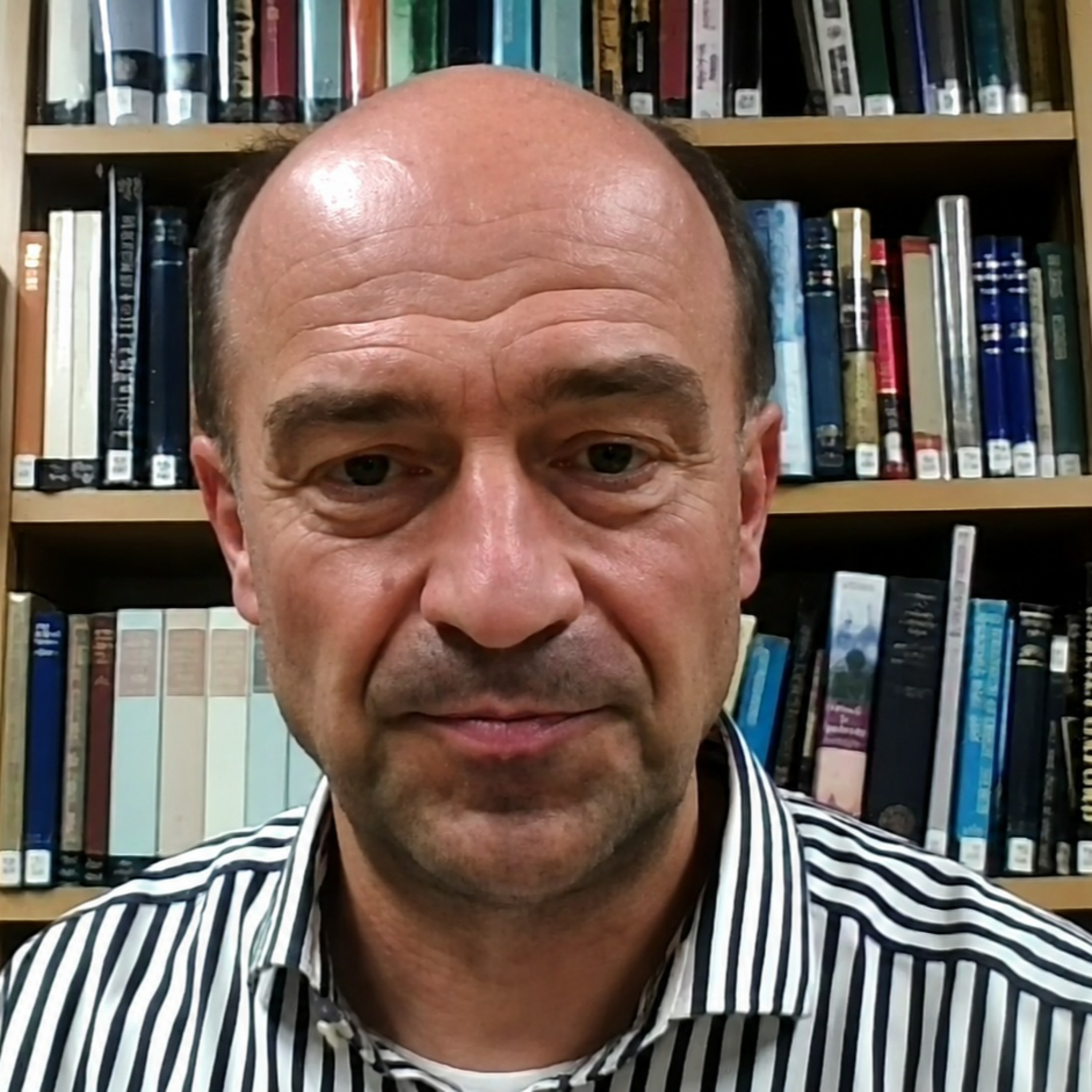
Today I'm joined by Professor Richard Werner, a German economist and internationally recognized expert on banking, credit creation and monetary policy.Professor Werner is perhaps best known for developing the theory of quantitative easingand for his extensive research into how commercial banks create moneyand how the allocation of credit can shape economic growth, asset bubbles and financial crisis.This conversation comes at a particularly important moment for IcelandIn just two days Icelanders will vote on whether the country should reopen negotiationson joining the European UnionAlthough the immediate question is about negotiationsEU membership would also place Iceland on a path towards eventually adopting the euroand giving up the Icelandic kronaSupporters argue that this could bring lower interest ratesgreater stability and stronger protection from currency fluctuationsCritics warn that Iceland would permanently surrender control over its monetary policyand lose one of the most important tools available to an independent countryduring an economic crisisProfessor Werner, thank you very much for joining meThank you for having meI think it is indeed a very important topicand I do have a desire to inform people as much as I canon this questionOther countries had this question beforeand considered whether they should join the EU or notand it really will affect people's livesIt's important to get this decision rightLet me begin with the wider questionWhen a small independent country such as Icelandconsiders joining the European Union and ultimately the eurozonewhat should its citizens understandbefore taking that first step?Well, quite a few thingsNumber 1 is, well, joining who?Joining what?That's very important to understandWhat is the EU?How does it work?What are the implications of joining this particular organizationand set of countries?You know, what is the EU?You know, what is the EU?what's the meaning? That's number one.So that's the first topic and we shouldspend some time talking about that.Secondly,one should also understandand have enoughknowledgeto understand, you know, who arewe? What is Iceland and what does itmean to be an independentIceland? Andof course there are questions that, you know,some people are asking, oh, is it viableto be an independentcountry? Therefore, isthere a need to look for analliance or evenmembership ofa bigger group, federal group ofcountries? Should one give upeven the country and joina bigger unity?These sort of questions are being asked.So one is moreabout the other, the particularentity one is going to joinand of course it's the EU that'sbeing proposed and secondlythe more general one, perhaps we shouldstart with the second pointwhetherthere's a need in general to joinanyone at all or whethercountries, small countries, can beviable on their own in thisday and age.Our supporters of the EU membership in Icelandoften present the euro asa source of stability,lower inflation and lower interest rates.Is that argument economicallysound in your opinion?No, it's not soundfor many reasons.Okay, so we're now talking aboutspecifically the euro.So let's keep in mind, you know,these other points because I do want tocome back to that question.Yes, we will do that.What actually is the EU andwhat does it mean to be anindependent country?Because it's actuallyvery, very valuableto be an independent countrythat, you know, the valueis a bitunderestimated.Because there's been this trendeveryone thinking, oh we need to joinand so many countries have to joinhave joined the EU.It's almost like a stampede. We also want todo the same.So that's why I also need todiscuss that. But now, just answering yourquestion, isn'tthe euro a sourceof stability, of economicprosperity even?The answer is a clearno. It is the opposite.Joining the euro is thebeginning of the end.It's the worst economicdecision any country could make.Why is that?I warned about the euroin the 1990s.I was alreadychief economist at a British investmentbank in Tokyo and already knownas, you know, an internationallyastuteeconomist on suchquestions. I'm in printin writing, you know, there's letters to theeditor to the Financial Times in the1990s explaining to people thatif one joins the eurothis will have significantnegative consequencesand there's actuallymany reasons.There's the fundamental ones that yougive up everything.You give up sovereignty, you give uppolicy control, you give upmonetary control, you give upthe abilitytorun the countryessentially. Because whoever controlsyour money controls your countryand monetary policy isthe most powerful ofall economic policiesand that would then be, if you join the euro,that's run by the ECB.Who and what isthe ECB? The ECBis the most powerfulindependent andunaccountable central bankin the world. The ECBis an international organizationthat is above the law.There is no publicprosecutor that can checkanything and hold them to account.There is no governmentthat can hold them to account. There is noparliament, no elected,democratically elected assembly anywherein the world includingin Europe that can hold them to account.By the treaties, the Europeantreaties, the EU treatiesit is set aboveeverything. It's aninternational organization thatis above evencriticism. It can't becriticised. It can'tbe held to account. Nowthat's already extremelyunusual. Why would anyone want tocreate such a dictatorialinstitution with such vastpowers and I dowould like to discuss thatbut let's just jump to thetrack record because some people sayoh it doesn't matter if they're doing greatpolicies. If they're doing wonderfulthings, we're happy to accept this.You know some people may say thisso let's look at thetrack record. Of course it's one of theyoungest central banks in the world.It's only well26 odd years old.Created around2000and it hasalready one of the worsttrack records of all central banksbut there's nothing anyone can do becauseit can't be held to account.I wantso this is not hindsight. I wantin 2003 published in my bookPrinces of the Yen, quantumpublishers.com. This book was a bestseller in Japan in the Japanese version.It's about central bankingbut has a full chapter on the ECBwhich was then very youngin 2003. We didn't have muchtrack record but we did have alreadythe legal status of the central bankoriginally in theMaastricht Treaty. Now it's part of theLisbon Treaty. This centralbank was given more powersthan any other central bank currentlyhas in the worldand I pointed out in thelist of powers and how it worksthat the incentive structureis such that the ECBhas not even an incentiveto create prosperityand stabilityand I want and myforecast was as written in Princesof the Yen, also publishedas a paper that likelythe ECB was going to createbank creditbased asset bubblesbanking crises, recessionsand vast unemployment andincredible dislocationin the Eurozoneand already a few years afterthis was publishedthat's exactly what they did.So the ECB is entirely responsiblefor creating asset bubbles in IrelandPortugal, Spain and Greecewhich it then followedwith its policyof then suddenly tighteningcredit, that's the usual central bankboom-bust cyclefirst it forced the banks tomassively createcredit for property lending, property speculationproperty bubbles in these countriesthen it tightenedand you bust the property marketyou bust the banking systemhuge banking crisiseven sovereign debt crisisand then it was responsible formany years of recessionin Spain and in Greece50% youth unemploymentfor yearsand in Greece for a decadethey engineered this recessionthe ECB has a terrible track recordall of these are policyresultsit didn't need to happenthere was no requirement to haveeither the crisis or the responsethe response was to prolong the recessionthey could have ended themthe tools are availablethey chose not to do thembecause that was the plansorry just to complete this pointbest periphery countriesIreland, Portugal, Spain and Greeceof course Iceland had not yet joinedso otherwise Iceland would have already experienced the same disasterthere is two where the centralEuropean countries are gettingthe same treatmentthe ECB is fair, it's dishing outit's disastrous policy to everyoneeven Germany is not allowed to escapeso from 2009 until2022it created a property bubblein the real estate market in Germanyby forcing banks to massivelyexpand their property lendinghuge property bubbleit peaked in 2022it's now in the phase of slowcollapseand will lead to a major banking crisisin the next couple of yearsyou will seeit's already beginningyou already have bad headlines on individual banksit's becoming more systemicthe record is disastroushow can anyone say this leads to stabilitywhat about countries that recently joinedlike Croatiait's been a disasterhuge inflationby the way that's the other disastrous policyinflation, the inflation of 2021 and 2022it was 100% created by central bankswith irresponsiblemassive money creationin Marchexcuse mestarting in March 2020and we know this againnot with hindsightbut when I had the data availablefrom March 2020on central bank money creationFederal Reserve, ECBin particular these two central banksI put out my forecastand I said that in May 2020June 2020in 18 months timewe will have significant inflationirrespective of what happens in Ukraineand that's exactly what happenedinflation late 2021and 22in some countries in Europedouble digit, high double digit inflationand this is not the end of itwe will now in the coming two yearsprobably see the second bout of inflationthis was created by massivemoney expansion by the central banksowhere is the stabilitywhere is the prosperitythe ECB has an astonishing track recordof delivering disaster after disasterafter disasterwell we hadI would say a relatively intensiveconversation about the European Unionnow in Iceland for a few monthsI haven't heard anyone speak of thislike you are doing right nowso I'm wonderingis this undisputedthat this is due to the policies ofECBand what is the way to test thisis to see whetherI made these forecasts before it happenedon my analysis and it didI won't doubt it, I'm in printI'm published on theseand that's exactly what happenedof course the ECB itselfhas put out liesand spin and PRsaying other thingsoh it's everyone else is responsiblebut not the central bankwhereas I look at the actual money creation databank, central bank credit creationand then you see what's happeningcentral banks in generalnot just the ECBhave in the entire post war erabut particularly in the last half centuryemphasizedinterest rates as their main policy tooland that hasreally been a distractionsome kind of smoke screenthey want peopleto look at the wrong thingmore importantfor central banks and for the economyand therefore for people isthe quantity of credit creationcentral banks have beenspreading misinformationabout how the economy worksabout how their own policy worksand I've shown in my workit's published in peer reviewed journalsthatfirst of all how banks workbanks create moneywhen a bank gives a loanit's new money creationadding to the money supplycentral banks manipulate banksand therefore have this powerful tool availablefor bank creationand it's very importantwho gets the moneybank credit for the real economyfor business investmentthat leads to growth, prosperity, jobsbut the ECB has made surethat bank credit is mainly usedsince 2020 for consumptionthat leads to inflationand also bank creditis used for asset purchasesproperty purchases, real estate purchasesIreland, Portugal, Spain, Greecein the first round, then Germanycreated bythe ECB and its controlover the bankswas the ECB really in control of the banks?yes, it was as the central bankand even as bank regulatorin Ireland and in Spainwho was the bank regulator?it was already the central bankof course the Irish central bankand the Spanish central bankbut they had become nothing but the localbranch of the ECBwhat they had to dothey had to follow orders from the ECBget the banks to massively expandproperty lendingalso through the regulations of courseand thenthe central banksthere's another important policy that the ECBhas been taking which has been disastrousand has been very bad for Europecontinues to be badnamely the central bankersthe ECB people in particularare very overpaid central plannersthey love central planningso when you look at their writingsand their proposals what they want to do isthey want to destroyprivate banks, commercial bankslocal banks, community bankssavings banks, credit unionsthey want to get rid of themand that's what they've been doingdid you know that 6,000 bankshave been killed by the ECBin those 26 years6,000 banksand it's been the small banks, the local banksthe banks that are in the local communitiesand lend to small firmsthey're goneand the trend continuesit's totalitarian controltool called central bankdigital currencyCBDC, central bank digital controlin the form of the digital euroyou know what this meansthis means that the ECB is sayingwe want to be theECB is the bank regulatorbut it wants to nowtake the business from the banksby opening accountsfor the publicto have accounts with the central bankCBDC means everyone will have an accountwith the central bankwhen the German banking crisis happenswhich probably will happen simultaneouslyeveryone will move all their moneyout of the banks into CBDCand the banking system is goneand then we achieve what the central plannersreally want to dothey want to be the only bank in townthey love the soviet systemcentral planners always admiredthe soviet systemthere was only one bank, the central bankthat is the goal of the ECBand that's where we're headingif you want to join the systemI really cannot fathomyou really genuinely believethis is their ideaof the futurethat's what they're working forthey've spent so much moneyon this launch of CBDCsand on the PRtrying to convince peoplethat this is what's necessaryand actually what is itthe central bank digital currencyis a current accountthat people have with the central bankthat means the central bankersnow want to be the bankerto the publicwell for the last 350 yearsthe agreement has beencentral banks are in the backgroundand are a wholesale bankworking with the banksthey're the banker of the banksbut who's dealing with the publicis decentralizedmany many banksand the more banks the betterand that's a decentralized systemwhen humans are involvedfor human societythe more effectiveand superior organizational formis decentralizationparticularly when it comes to powerand anything to do with important decisionsit's called the principle ofsubsidiaritywhich says that it's more effectivemore efficient and betterif decisions are done at the lowestpossible level in the hierarchyand for the financial systemthis means the money creationthe decision who gets newly created moneyand for what purpose is it usedand how much should be madeon the local level by the local banksthat is superiorthe soviet systemof only the central bankone central planner decidinghow much money is createdhow it's allocated in the economythat has failedbut central planners still love itso central bankers love itthe ECB has this as its goaltell me Richard how likely is itthat the digital currency systemwill take overin the European Unionin the Eurozonethe likelihood is something like 90%95%it is being prepared to happenand perhaps it should be evenI should give a higher figureclose to 100%because unfortunately we've now reachedthe stage where the EU has becomeentirely dictatorialand people that havejust simply opinionsfrom the European Commission's opinionsthey get sanctionedso I think it's timewe've talked a lot about the Euroand the Euro is a function of the ECBso we've talked a lot about thatI think we need to broaden up nowthe referendum is aboutwhether one should join the EU or notand what is the EUwhat actually is this organizationand that's my first questionto the public of Icelandwhy are you even thinking about this questionjoining the EU?why would any countrywant to join a dictatorship?the Icelandic peoplehave one of the most impressivehistory of democracythe old Germanic tinga thousand years agofree, sovereign peoplemet in the open, in the tingand they talk freelywell, the EU is the absoluteopposite of thatthe EU is an institution thatcurrently is essentiallysanctionedpunishing peoplecounselling their moneycounselling anyright to make any transactionfor uttering their opinionthis happened toa Swiss national who lives in BelgiumJacques BourgB-A-U-Dhe was a senior officerin the Swiss armyand in the Swiss governmenta senior person, he's retiredlives in Belgiumfor personal reasonshe was asked his opinionhe's an expert on Ukrainehe was asked his opinionhe mentioned his opinion in publiche was sanctioned by the EUwhat is this sanction?it was used against Russiansit's an extra legal processit's decided by the European Commissionand this gentleman can nownot buy anythinghe can't pay his rentnobody's allowed to give him moneyand it's been used for journalistsby the EUwe also had a Swiss nationalLiechtenstein Swiss nationalwho bought a company here in Icelandand he got sanctionedbecause of some bogus claimsof Russian connectionsand I totally understandwhat you're talking aboutand in this case it was aboututtering opinionsmentioning opinionsso no more free opinionthe EU is not about free speechpeople get arrested in Germanyjust mentioning their opinionit's a very sad recordnow how can this be?surely these are exceptionsthese are special casessurely the EU is democraticthat's what most people thinkbut it's notwhat is the principle of a democracyhow can we recognize very quicklywhether a country is a democracynow let's look at the Soviet Uniondid you know that the Soviet Unionin its legal documentsofficially claimed to be a democracythat's a very interesting casethey claimed we're democracythe Soviet Union is a democracyand do you know how they arguedthey said well look we have a parliamentwe have members of parliamentthey're elected in electionsthat's the very definition of democracythere is the Sovietyou know the very word Sovietare these councillors that are electedthe Sovietsit's a democracyok now that's the claimand of course the same claim is made in Europethe parliamentthe European parliamentand it's truepeople get elected for this parliamentthey get paid a lot of money tax freenow why was the Soviet Unionnot actually a democracyit's because the members of parliamentwho are supposed to be the lawmakersthey were not the lawmakersit was a trickit was a conthey had no power to make any lawsthey were a talking shopthey were a rubber stamp parliamentwho was the lawmakerit was the Soviet Politburoa small group of partycommunist party people who were not electedthey were the dictatorsnow let's go to Brusselsthere is a parliamenthighly paid peoplemembers of parliamentthey're so highly paidthey don't want the public to knowthat they don't actually have any powersto make any lawthey have not done a single lawall the laws are drafted written proposedand pushed throughby the European Commissionit is the Soviet systemit is a dictatorshipthis is a factand everyone should know thiswhy would Icelandwith this thousand year old historyof democracyof real grassroots democracyunfortunately it's actually small enoughso people can really have an impact in politicseveryoneyou know I like small countriesbecause each individual has a higher value in relative termsthan 350 million peopleyou're gonna be one divided by 350 millionthat's not a large numberyou don't think that a countryfewer than 400,000 peoplecould have a large say at the tableat the European Unionwell it's true that whenthe system is thatthere are small countriesand they have the same weightsay as Germany and a small countryhas the same weightbut as you know it's already been decidednow von der Leyen she's one of those dictatorsthatthe decision making processin Europe will be changedit's a matter of public recordthe reason was that Hungarya smallish countrycaused a lot of trouble by asking questionsby not immediately bowing and agreeingas a resultthey are now changing the processso that there will bea simple voteyou don't need consensusand therefore the veto right of each countrywill be taken awaysmall countries influencehas been reducedand of course that trend will continueand soyou cannot rely on having any influencebut then anyway influence on whatParliament has no influencethe European Commissionwrites 100% of the lawsnow if you look at those lawsit's interestingbeing an economistand banking expertI look at the bank regulationscoming from Brusselsbut it's noticeablethat the length of the wordsand the paragraphsand the laws is massiveyou know there used to beshort bank regulationsmaybe 60 pages 100 pagesBrussels delivers 600 page documentsand they are writtenoriginally in Englishby British lawyersnow how is thatBritain is not even part of the EU anymorebut even when Britain was part of the EUshould the city of London lawyers really writethese lawswell you know what's happening isBrussels and you look it up pleaseis known for being the centreof big businesslobbyingthat's how it worksso when you have these dictatorsthe commissarsand von der Leyen heading this at the momentbeing the top dictatorwhen you have such a systemof course big business sayswell that's not necessarily a bad systemwe can talk to these peoplewe can invite them for dinnerwe can help them get someconsulting contractswe can give them certain benefitsand they will be happy to talk to usand this has been happeningto such an excessive extentthat it is shockingit is really a swampof corruption that is what Brussels isdo you know thatit's not long ago when the entireEuropean Commissionthe commissar the top presidentthey call the personthe commissionerhad to resignthey all resigned simultaneouslythe media didn't write much about itbecause of corruptionthe auditors of the EUmostly don't sign offon their accountssome auditors die on the jobwhen they raise too many questionslook it upso it is a swampand the lobbyists ultimatelywrite these lawswhy are banking laws written in Londonbecause you have the biggest banksof the worldhave the presence in Londonthey make sure that they are in Brusselstalking to the commissarsand it's actually a lot of workto write these lawslook we can draw this better for youwe make your life easyand of course there will be nice big fat jobsfor you in our banks once you retirethis is how it worksI think the biggest reasonwhile a lot of Icelandersare eager todo this possibilityis because they are tiredof theinstability of the kronalike many Icelandic householdsassociate the krona withhigh inflation and extremely highmortgage ratesso I want to ask youto what extent are those problemsgenuinely caused by the currency itselfrather than by domestic bank lendingfiscal policyhousing shortagesor excessive credit creationand the responsibility of the central bankso the Icelandic central bankneeds to be improvedgive me the jobI could deliver 10% economic growthin Iceland at virtually no inflationand prosperitybecause every country can do thisI'm actually an expert in theEast Asian high growth modelwhich is based originally on the German modelPrussiaand then pre first world war Germanywas a high growth economydouble digit growthand then people will benefitthe middle class will benefitbut you see the central planners don't like thatthey don't even aim at thatthat's not their goalthey mostly help big businessand that's a problem with all central planningthat they tend toessentially get captured bybig business interestsso the Icelandic central bankbasicallyit looks likeif this is the recordit hasn't done a good enough joband it's very easyit's very easy to deliverstable currency, stable FXwhat monetary and banking frameworkwould you recommend insteadif Iceland would reject the EU membershipoffer and retain the kronaright, which would be very wiseit's good to have your own currencythen you arein charge of youreconomic policiesand your countryand therefore yeshopefully Icelandic people will realizethey shouldn't give up their sovereigntyand they should not join a dictatorshipso if that happensI recommend thatone reconsiders the status of the central bankthere were some really good initiativesin Iceland after the2008 crisisyou knowalso the Icelandbanking crisis thenbut it looks likesome of the lessons were not fully learnedone important lesson is thatthe central plannersneed to be accountablethe central bank needs to bemeaningfully accountable for its policiesif it's not deliveringhigh growth and low inflationand stable currencythen it's notgood enoughthis can be doneso to give you an examplewhat's one of the policiesthat need to be takento increase economic growth and prosperityand therefore strengthen the currencyand create more stabilityis the structure of the banking systemnow for a countrywith 400,000 populationyou still should havemore banks than currently existin Icelandbecause the best system iswhen you have many bankssmall banks, village banksso any villagethat has a population ofany townwhere there's like10,000 peoplethey should have their own bankin Icelandthere would be local bankscommunity banksand they should mainly lendand the regulatorthe central bank can make surethey mainly lend to businessesit would be the local businessesfor productive business investmentbecause bank lending is money creationthen you make sure that money is createdfor something that adds valuecontributes to national incomeboosts the economy, creates jobsand banks should nottend to assetfor asset purchasesI think there's probably stilltoo much of that going onI would recommend to set upnon-bank financial institutionsto do all mortgagesand do all asset lendingbecause then for mortgagesand asset lendingyou use existing moneyand you can't have an asset bubble anymoreand you can't have banking crisis anymoreand the whole instability disappearsyou see because banking is money creationthat's why it's importantthat it's linked to contributing to societymoney should only be createdif value is addedand the only value added can come aboutif you have bank lending for business investmentbecause thenit's still money creationpotentially taking personal power from othersthrough the money creationbut the business is delivering new goods and servicesthat's adding valuethen you don't get inflationyou get growth and prosperitythat's interestingabout the specialIceland situationIceland has ahighly unusual system ofinflation index mortgageswhere the outstandingprinciple rises in line with inflationand this means that the borrowerscan make every scheduled paymentand still see the amount they owe increaseand increase and increasefrom an economic perspectivewhat effect does such a systemhave on households inflationand the distribution of riskbetween banks and borrowersyes wellin some ways inflation indexingis attractiveit has some advantagescertainly forconsumers, for individualsfor peoplethe thing iswhen you do thatyou're really treating symptomswhy don't we treat the causethe root cause, the diseaseand the disease is inflationby indexingand instead of sayingwell we accept there will always be high inflationor significant inflationso it's like a second bestit's accepting the underlying problemwell let's solve the underlying problemwhy did Germany never haveinflation index stuffbecause they neverin the whole post war erathere was no significant inflation in Germanybecause the Bundesbank was doing its jobwhy was it doing its jobbecause it was made less independentcompared to the previousthe Reichsbankwhich was a terrible central bankcreating boom bust cycleshyperinflation, bringing Hitler into powerall that stuff, that's Reichsbankand the Reichsbank was totally accountablelike the ECBin fact in Princes of the Yenin my bookI argue that the ECB is the revivedReichsbankbecause it's so totally unaccountableabove the lawso after the second world warpeople in Germany realized that was badand they refusedthe powers of the central bankand that's what the Bundesbank wasand that's why it was successfulthey made it accountable to parliamentand they gave it laws thatsaid it had to deliver growthand low inflationso not just an inflation targetbut also growthand stabilitybut how do we actuallybecause many Icelanders believethat adopting the Eurois the only realistic way to escape high interest ratesand inflation indexed mortgagescould Iceland abolishor gradually replaceindexationwhile retaining the kronaand how would we do that?absolutelyso the key is to reduce inflationand immediately there is no more justificationfor the inflation indexthere is no need for itnobody will ask for itnobody will need itso there should be low inflationwhen there is high inflationthere should be too much money creationfor consumptionthere should be no money creation for consumptionthere should also be no money creationfor asset purchasesbecause that's just changing the ownership rightit doesn't justify that people's purchasing powergets diluted through the money creationso there has been too muchof the wrong bank creditand central bank transactionshappeningthat needs to be changedbank credit and money creationshould only be doneit's used forproductive business investmentthere's never been a banking crisisdue to too much small firm lendinglending to small firmsfor business investmentit's always either too much consumer lendingor too much property lendingor financial speculation lendingasset lendingso it's actually very simpleand can be doneunfortunately the international banking ruleswhich of course the Icelandic central bankis also oriented towardsthese Basel rulesBasel 3Basel 4it's decided by the Basel committeeon banking supervisionBCBSthey havealready the wrong emphasisbecause they encourage banksto lend for mortgagesmostlyand neglect bank creditfor business investmentit should be the other way aroundbanks shouldn't give mortgages at allit should be non-bankswhich could be quite excitingbecause basicallyif the central bank now saysstop mortgages from banksfrom now on it will be mortgage companiesnon-bank mortgage companiesonlyandyou can actually boost that sectorthere can be more companiesthat are created that focus on thatthey will raise their fundsthrough bond issuancethat banks won't be allowed to buythe economyand then you canmake sure that existing moneyonly is used for theseunproductive purposeswhereas the banks would focuson what is good for everyonewhat creates prosperityand that is business loansfor business investmentsounds really interestingbut we recentlythis past week we had yet anotherinterest ratethe central bankhere in Icelandhe put up the interest ratesup to 8%nowthis has been steadilygoing up for a long time nowandone has to wonderif the interest ratesare really bitingif we have theseinflation index mortgageswhich people don't feelthepressure of the interest ratesit's a circle ofit gets you nowherewhat do you think about thisand yes so farwe haven't talked much about interest ratesthecentral banks argue thatthey need to focus on interest rate policybecause that's how they manage the economylower interest rates will lead tohigher growthif they want to slow the economyand slow everythingthey will raise interest ratesso they want to raise ratesthat's how they talknoweconomists of all these different schools of thoughtKeynesians and classicaland neoclassical and monetaristsand so on, Austrianyou've got many schools of thought in economicsthey all agree with thisand that's quite interesting becausefor 200 years economists have been saying thisnow where's the empirical evidencehow many empirical studieson any countryshow that when you lowerinterest rates the economy acceleratesand when you raise rates the economy slowsthere is not a single onethere is no empirical evidenceso I did with a good econometricianI did the first empirical studyof this questionit's published in the journalecological economicsthey were the only one preparedto publish it but it's a good journal2018it's calledreconsidering monetary policyit's open accessreconsidering monetary policyecological economicsyou will get itwe tested what is the relationship between interest ratesand economic growthit's not negativelow rates, high growth, high rates, low growthit's not an inverse relationshipno, it's a positive relationshipand what's the timingand which one happens first and affects the otherwithhold interest rates affect the economyis the economy affecting interest ratesso actuallyit's not lower rates lead to higher growthhigher growth leads to higher ratesand lower growth leads to lower ratessoessentially central banksshould get out ofthe business of manipulating interest ratesit leads to distortionsthe markets can set interest ratesvery welloh but thenhow do they steer the economyif they don't mess and meddle with interest rateswell in any casecentral banks don't use interest ratesto move the economythey actuallyusewhile you're not watchingthey use the quantity of credittheir own credit creationand bank credit creationthe quantity to move the economyand also the allocation of creditfor different purposesthat's how it really works in realitythe story ofoh it's the interest rateit's prices and not quantitiesthis is a theoretical ideathat was proposed 200 years agoand they said thatoh everything is in equilibriummarkets are in equilibriumevery market is in equilibriumat the same timeit's wonderful general equilibriumwell that's a whole lot of nonsensethere's no equilibriumno markets is in equilibriumthere's certainly no general equilibriumbut still today central banksif you look at their researchthey use these DSGEdynamic stochastic general equilibrium modelsit's entirely nonsensical there is no equilibrium at allit's determined by quantitiesthey're rationedthe short side principle applieswhichever quantity is smaller determines the outcomeand has market power to pick and choose who to tradeand it's the samein any marketthe real estate marketof course is a rationed marketand so onsohow do we have good policies thenwhat do we need for good policieswe can usually havelower interest ratesand higher growthand more benefitsfor ordinary peopleifcentral banks just adoptdifferent policieswhat you see is what you getwhat you observe is the policiesthey've been aiming atand if it's volatileif there's volatilityif interest rates are too highand growth is too lowinflation is too highwell this is bad performancesoI guess you need to change your central bankersand get central banks that deliverand give them three yearsfour years to deliverif they don't get them out againbut if they all follow the same policyif they all follow the same policylike they've been doing for 100 yearsit's difficult toto finda new approachwell I'd be happy to give it a shotyes are you availableyes of coursesowhat should bethe main leading roleof a central bank in a small economylike in Icelandit's just tooversee the quantityof moneyin the marketactuallyit should be even less than thatit should be quite non-interventionistfirst of allthe most important role isinstitutional designinstitutions and incentive structuresand regulationswell and there should be fewregulations and simple regulationsonly so that people don'tspend time and waste time onbureaucracy it should be simplefor example bank regulationis crazy it'svast it's enormousand you knowunfortunately actuallyI believe Iceland is already affected by all theseEuropean regulations as member of theEEAso then Iceland should be familiar with thiscomplete excessin regulations evenDraghiwho was head of the ECBand was part of this systemhe has said in his Draghi reportthat there are thousands too manyregulations in the EUso banking regulations scrap it allhave some very basic rulesand you will find it will be much moresuccessfuland banks will be able to have lowercosts they don't have to spend alltheir money on complianceand therefore they can offercheaperloans and they can servepeople betternamely you just need really only one rulein bankingand that is first of all it should also be madeeasy to set up new banksthere should be30 more new banks small bankslocal banks community banks savings bankscooperative banks in Icelandand it should be made very easy to setthem up you meet some basicrequirements an accountant confirmsyes you've got a modestminimum capital you meet thoserequirements and thenyou register the bank there's no moreauthority humming and hawingand you know taking yearsto give you a license that should be abolishedso there should be many more banksand then the rule banks need to follow is thisbanks must only lendfor business investmentthat's itand no loans for mortgagesno loans forasset purchases financial transactionsreal estate purchasesthat should be done byspecialist non banks and also noloans for consumptionyou will not get a crisiswhat sort of entities would that bewho would be the borrowers of mortgageswell the borrowers of mortgagesof course ordinary people familieswant to borrowwho borrows itso these would be non bankfinancial institutions they need to beif they don't exist they need to be set upit can be a whole booming industryit's a very simpleset up so they focus ongiving mortgages of course theyneed the specialist knowledge maybe hirethem now from the banks since the banks are going to stop doing thatbut this is not state runthis is private companiesyes oh yeah these are allcommercial private companiesand the key thing is so they you knowthey can focus on and there should be competitionit's very important always to have many playersor several players that compete against each otherthen you get a better resultand then the key question is howthey're funded they should not be funded fromdepositsthat would make them banksso they should not be allowed to take depositsfrom the public they would have to fundthemselves through bond issuanceand the bondswould be bankswould not be allowed to buy these bondsso that means they have to literally getexisting money and they are notallowed to create money and thensuddenly you take away the link between moneycreation and the property marketyou will see property priceswill not risethey will stay stableand finally housing can be affordablebecause you don't have thistendency of ever risingproperty pricesthis sounds it makes total sensewhat you're saying it sounds really wiseit is and it has been doneyou know all this is based on actually empiricalanalysis you know mytwitter x account is scientificecon i like todo the you know scientific approachmeans empirical facts need to driveyour analysis and your policy conclusionsbut many countries that did thiswhere has this been donethey did exactly that and for decadesthey had 15% growthwhere has this been donethis has been done in many asiancountries japan koreataiwansingaporeeven thailand you knowfor many years and then laterchina joined from 1978and they also adopted this approachyou know when you have 15%growth that means everyfour and a half years you're doublingnational income and then you're doublingit again and again and again and that'show you get really prosperousand everyone gets so many opportunitiesso many job opportunitiesyou know this is really what iceland is aboutbecause growth is not limitedgrowth is only limited byhuman ingenuity and i think there'stons of that in iceland yesdefinitelyso you are absolutely sure thaticeland could achieve greater pricestability and lower interest ratesand higher growth and moreprosperitycurrency stability stronger currencyyou see if you do this setup then you getvery successful as a countryand you focus on importinglow value added goodsraw materials and exportinghigh value added goodsof course you know you canlike say in fisherieseven there you want to focus on the highend maybe think about how one can addhigh value and focus on maybegourmet fish and you see justwherever on the high valueand also maybe make sure that youcapture the entire chainso you know the fisherman doesn'tget very much money from the fishit's the final retail seller that getsmoreor selling to restaurants they getactually more bigger share of the totalamount of money it costs right wellmaybe the fishermen need to get togetherand this needs to be encouraged andthey can move into the final market as wellthey can be cooperativesthat um that alsothen have you know deliveriesto restaurants and so on you seebut these are just just a small numberof tiny examples but basically if youif you import raw materialsand add value and exporthigh valued goodsyou will have high economic growth and yourcurrency will strengthenand this alsothis also applies tohigh end luxury tourismbecause tourism is one of the bestbecause services are includedand Iceland is very good in servicesand there's high endservices exactlyand you saywe can achieve all this bymerely just reforming ourdomestic banking and credit systemand while retaining the kronaand absolutelyin fact that is an important pillarretaining your currency becausethen you have the leeway to do thesechanges once you give up the currencyyou can't change anything anymoreyou have to do what the ECB is telling youand of course if you join the EUyou have to do what the dictators in Brusselsare dictatingit may even be worthwhileconsidering whether oneshould dropout of the EEA statusandjust get more freedom and have morebilateral agreements with countriesinsteadsome people are mentioning thatbut what would you say thenis the greatest misconceptionIcelanders have when they assumethat adopting the euro would automaticallysolve inflation and high interest rateswell yeahas you're sayingthe misconception is thatthe EU has the answersit doesn't it has the oppositeit offers dictatorshiploss of control over your countryand foreigners taking overdeciding everything in Brusselsand what are they giving youin exchangewell likely higher inflationthat's happened to so many countriescreated by the ECBand also less growthbecause the ECB the EUand the ECB are anti growththey don't allow growth for member countriesthey do the oppositeand the bank regulators in the EUwhich often is the ECBor the central banks but can be a separateagency but they all have the same policythey're now telling banksoh don't lend for productive businessinvestment whywell we don't want economic growth in the EUwell do you want to give up growth and prosperitythere's no reason to do thatbut a lot of peoplepoint out that peoplein Denmark or people inSweden andFinland and everywhere around usthey don't have to pay so highrates on theirmortgages the interest ratesare not so high there that's whyI agreeit looks like it's too high in Icelandbut that's a bad policyfrom the current central bank sonumber onedon't join the EUnumber twosort out your own central bankbecause it should be made to deliver better resultswe've become far toogenerous with our politiciansgovernments and central bankersby letting them deliver bad policiesand bad resultsyou know the EU says zero growththat's what they're aiming fornobody can stop them they're dictatorsGermany has had zero growth for 3-4 years nowunemployment is risingwhy do you want to join thatbut also we should demand from our politiciansactually we can have high growthand prosperitywhy aren't you delivering itso if we just skip thecomments you have onthe EU being a dictatorshipand all thatwould you say that a flexible exchange ratewith your own currencyis more important than havinga steady currency that you don'thave any control overyes absolutelyand why is that more importantbecausefirst of allyou don't know what's going to happenand when something happenswhere you need to reactif you don't have a currencyif you don't have your own monetary policy anymoreyou just have no toolyou have togo down with the systemand the EU is going downI mean why people want to joina sinking shipis really a puzzleI saw someoneliking this toosomeone applying for theSoviet Union in the year 1990yeah exactlyand that's very accuratebecause literally the EUBrussels is modeled on the Soviet Unionwowdid you know there's one more aspectbasically to thisthis is maybe a more political aspectbut for some people that may be more importantyou know some peoplethey say okay I'm doing okay the economicsto me I'm reallyI feel I'm EuropeanI want to be part of the EUI can get that sentimentbut there's also an issue hereand I want to make that as the last pointdo you knowhow the EU was createdand that also explains the puzzlehow can what was a collectionof democratic countrieshow can thatcreate a superstructurethe EU that's undemocratichow could this even come about?how is this possible?so you need to know the history of the EUthe EU was created bythe American Secret Servicethe CIAthis is a matter of public recordbecause all the founding fathers of the EUJean MonnetSchuman, Sparkthese peoplethey have been revealedby declassifiedCIA documents as having beenCIA agents literallyand so what was their job?well they had the job to createthe United States of Europebut not like the United States of Americaa democracybut as a dictatorshipin the sense that Americacould use it to give instructionsto Brusselsto then instruct all the countriesthe member countriesso it was created on purposein this undemocratic Soviet systembecause it would enablethe hegemon, the United States of Americato then control the entire EUall down through one avenueyou know, Henry Kissinger used to saythen I call Europewho do I calland he doesn't want to make 28 phone callsand of course when he calls Europehe doesn't want to discusshe wants to give ordersso that's the structure that was createdlook it upmany media don't write about itbut it has been publishedit's a matter of public recordthe EU is a CIA constructsubjugating Europe to the United Statesthe United States deep statethese 17 secret service agenciesso often I believethe president and the governmentis not even aware of what's happeningwhat the secret services are running in Europeand so againthat's another fundamental reasonwhy you should not ever join the EUwhy would you want to jointhe CIA run operationyeah that's a good questionthat's really interestingI've never heard thisbut I'm definitely going to look into itmy academic articlesbut also on this EU and CIAI've got articles on myone of my websitesProfessorWerner.orgif you look it upthere's an article which I wrotewhen the British did their referendumon whether they should exit the EUand so it's an updateon what you need to knowon the EUbefore you do your vote in the referendumand that should also be readby everyone in Icelandand otherwise I do reportson my Substackthis is for $9 a monthI do updates, I analyze credit creationand politicalpolicy implicationsacross the globerwerner.substack.comok we'll look into thatProfessor Wernerthank you so much for joining meand sharing your perspectiveon the European Unionand the Eurothis is of course a very important momentfor us Icelandersand really importantthat we understand the long timeconsequences of the choicesbefore usso I thank you again so muchProfessor Richard Wernerand wish you all the bestthank you very muchand let's hope and I'm prayingfor the best outcomeon the day of your referendumthank youthank you