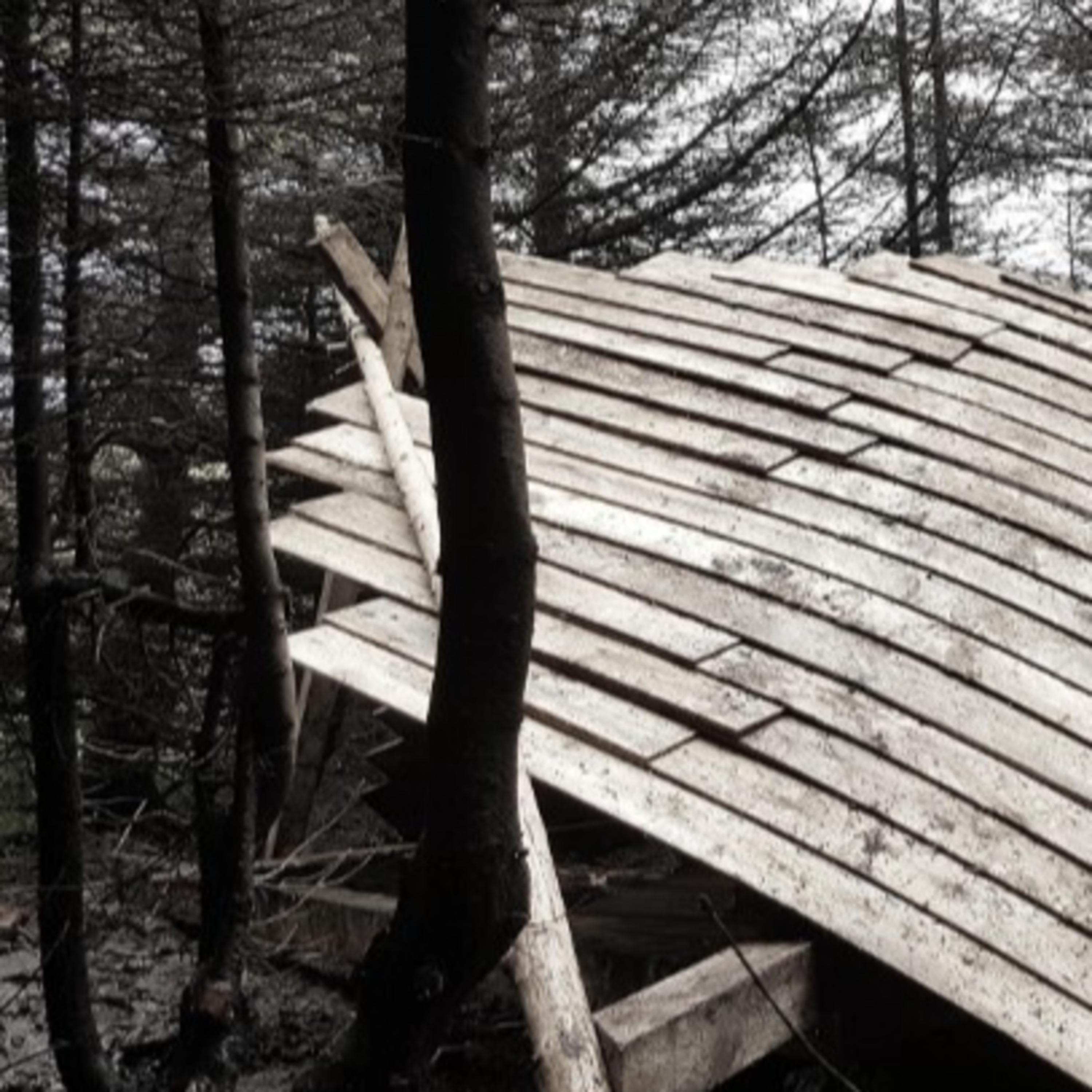
Welcome, Roger Mullin, to Slæðilist.It's an honor for Oscar and I to have you as our first English version podcast.So you're a professor in Dalhousie.Yes, in Halifax, in Canada.In Canada, it's of architecture.And there's an exhibition next Sunday on the 11th in Slæðilist.October 11th, yeah.And it's about...At 3 o'clock, we're opening at 3 o'clock, yeah?Yeah, at 3 o'clock.And it would be great to maybe learn more to start with just about what the exhibition is going to be about.Yes, well, thanks so much for inviting me here.It's a pleasure.And anytime there's a new reason to come back to Iceland, I'm happy to take it.And thank you to you both and to Oscar for supporting the direction of this exhibitionand giving it a beautiful space for it to happen in.The opportunity really was something that we discussed that winterwhen we were working alongside one another at the university.And it was upon sharing a bit more about the history of my bringing students here,which is typically in the summer for two weeks during our summer semester.So it's a kind of June, two weeks in June, a lot of sunlightand some kind of brisk travel, camping, improvising,traveling.I like to call it when we're kind of on the road.And we can talk about the kind of pattern of those visits,but this exhibition, to your question, is an attempt to kind of float certain projects.And there are many projects that were completed each year by 12 to 13 studentsover four visits.Four periods from 2015 to 2018.And it's been really interesting for me as one of the people that's kind of,let's say a kind of fabric between the visits.The students change, but there are people that are involved that are constant.So some of them have been more than once of those students in the trips?No, but I have worked with some of them previously.I would point to my companion.Tannis Ellis, who, she's originally from Winnipeg, Canada,and she's a practicing architect, primarily in London in the UK.And the first excursion, I would call it, was in 2015.And it was actually a kind of bringing together of students from Dalhousieand students from Manitoba.And it was kind of her conjuring of that idea and approaching both Manitobaand approaching Dal for us to come, that kind of started that pattern.And so the work, the exhibition is titled Prototypes for a Landscape.And it includes, broadly speaking, like architectural research and field work.And typically in my case, there's three courses that the students are taking.They're co-requisites and they include a design studio,humanities seminar, where they write a paper.That you also give?Yeah.Thirdly, there's a technology course, which I also give.And that may be the beginning of a conversation about like what the outputs arefor each of those subject areas and why there's kind of like a range of media,including Conte and built details and so forth.I've arranged the, conceived of and arranged of the exhibition geographically.So as part of those excursions,we've had the opportunity to do a couple of weeks of camping and traveling around the island clockwise or counterclockwise.And on one occasion, we focused exclusively on the Western fjords.And so the geographic structure of the exhibition in very simple terms allows a kind of bridge between the design projectsthat were completed and any visitors coming to the, to the exhibition.Yeah.Yeah.Yeah.Yeah.Yeah.So in the same way that we circumnavigated the island, so to speak,you can circumnavigate the exhibition in that way.There are also some thematics that,the kind of residue that's part of a kind of process of reflecting on the work that,I hope highlights some shared interests that have to do with the kind of influx of tourism on the island.The there's one,area or project I've called energy to die for,which is,you know,the kind of prevalence of energy access to energy that the island affords.And there's a few other things,but most of the work is on the wall.There are design projects on the wall.There will be some photographic images of one-to-one details that the students complete.There will be some photographs of the,of a small project that we were fortunate enough to collaborate with,um,the Reykjavík Forestry Association and the Sculpture Association here.And we,so we built a small improvised shelter during five rainy days,not in July,but five rainy days in June.Uh,so it was a bit of a hike.It was kind of like an extreme architectural sport where we were hiking up a couple of kilometers a day,working and then hiking back down.It's still there?It was there.Could we go?Haha.Haha.If we have time.Yes,it was still there in 2023 when I was last here.Yeah.2024,2025.Yeah.And it's in,we can say where it is,right?It's in Mokilsal,right?Yeah.Yeah.So it's just under,under Þjá.Yeah.Kind of the roots of Þjá.Yeah.Yeah.Yeah.Amazing.And,uh,and some of the work is,is yours too.I mean,it's mixed.So you're also working with the students.So that's kind of,that's the way that you run your,your,this kind of co-working situation,right?It's,it's not merely just you kind of walking around and saying,you know,yeah.Yeah.It's a,it's a fairly immersive,um,experience,I think for the students and for myself and,uh,can be quite exhausting,but it's a,it's a kind of,it's a hustle,um,you know,that includes travel and,and preparing for travel and then dealing with travel.And all the while,um,looking at the landscape and the architecture through certain lenses that,um,include a kind of large format sketching,um,to a lesser degree,photography.So it's kind of difficult to do both well.And,um,so we kind of focus on the drawings.Then the,you know,I'm kind of like,uh,I,I'm trained as an architect,but I'm quite interested in,um,you know,the kind of aspects of land,land art and sculpture.And,um,you know,a kind of idea of,of information as inspiration.So certain materials have,you can quantify their characteristics,but you can also kind of imagine sort of like trajectories for certain things.So the small and very humble,um,um,um,um,um,um,um,um,um,um,um,um,um,um,um,um,um,um,um,um,um,um,um,um,um,um,um,um,um,um,um,um,um,um,um,um,um,um,um,um,um,um,and stones projects andbecause the projectemerges out of kind of drawingwith the materials rather thanusingtypical architectural drawings which arekind of like predictive. Architecturaldrawings predict what should be built and sooften in theeducational design built projects thatI do and that othersdo for that matter, there's a kind ofdrawing of record that happens after theproject is built andmy hunch is thatyou wouldn't arrive at the built project if you wereusing the predictive mode of drawingexclusively. So there's some kind of delightin that that I enjoy.That is just kind of based on whateveryou find there, the dimensions ofthe lumber that you justjumped or happenedto receive.It's often that way and so it'sa kind of differenttype of currency.Often the projects andI've been doing them probablythe first one I did was in 98as a recent graduate ofthe program at Dalhousieand then prettyconsistently one or two of them a yearand often inpartnership with community and so you kind of likeunderstand thatit's notnecessary, I mean thefunding is usually pretty slim but there'sresources everywhere if we justlook for them. What was thedual name you had?You said architectural fieldwork anddesign.Architectural researchand fieldwork.Yeah, I mean just thinking aboutthis aswhat did you callit, the predictive way of drawing?So this is kind of the non-predictive way ofdrawing. I mean I was wondering if one could thinkof it almost kind of in an expandedsense as a way of livingalmost or as a way ofconceiving of architecture in akind of overproducedoverexploitedextracted planetso how can one conceive ofthis kind of after the factarchitecturein some sense?Yeah, there's, you know, I'mthinking more deeply about thatand starting toturn my handto writing and reflecting onthat kind of work and how itsituates itself both ina kind of academy where studentsare there tolearn how to become architects so they canpractice architecture butyou know, onetries to kind of fit in these othertypes of experiences thatI think lead to an appreciation of theenvironment, landscape and when youcollectivelybuild something and you agree that thisis an architectural enterpriseand you dot your I'sand cross your T's then you're makingarchitecture and it's verypossible to accomplish thatthrough modest means I thinkand itI think then to your pointOscar, if I understand it there'slike implicitly a kind of the seedsof I thinkmore intelligentarchitecture in the futurewhere people may notturn toextractive measures or alternatelythey might decide that there's a great valuein working within theirown communityetc.Or working with things that are somehowstill, you know, already existin their own way.Now I'm thinking of these,I don't know if you're going to show thembut you have, you take a great,Roger takes great interestinimmersing himself in thekind of the creative community that he'sstudying so he's very interested inworks that Roni Horn has donein Iceland or Richard Serrahas done in Iceland and he was justshowing me a project that isin a way your project, you know, to methat's what's so fascinating is like he's takingthese Richard Serra sculpturesbut he's, which are nominallyRichard Serra worksbut they somehow become RogerMullen works, you know, when you startphotographing them and analyzingthem andyou know, turning them intoor at least, you know, using them as a vehiclefor your own architecture somehowand this is architecture, you know.It certainly isa clear example ofstructure in landscape andthen thepart that I enjoyabout it are the rules that come withthe conception of the project andif you're familiar with, I'llpronounce it, aþangaror stages, I thinkit's also called and they'rein short they're pairsnine pairsof basalt columns, one'sfour meters tall, the other is three meters talland they quite cleverlyare situated so that the topof each of the pairare at the same elevationand in order to then accomplish thatthey need to be at different distancesin relation to the topographyso thesteeper the topographythe closer they are and themore shallow the topographyis the farther apart they areand so my eye, or in this casemy cameraI set up some of my own rulesto photo document itand I took basically two photographsof each pairone photograph in elevationat a distance of ten pacesor around ten metersand a second photographat an oblique angleat a distance of five pacesand so to cut to the chasethe delight I takein this is thatthe basalt columnsappear to be the same sizein each photograph but theyhave a different spatial relationshipto the format of the photographso it'sand on the first pageyou know this is kind of likelearning from I would sayconceptual artin the sixtiesand the seventies where one wouldkind of write instructionsLawrence Wiener or othersand you kind of write a recipefor work if you wouldand this is kind of that done retroactivelyalmost like an analysisit is yeah it's a studyand it must be saidyou know for those listenersthat do not knowthat this isa minimalist landscapesculpturethat you find in Veðea short ferry rideoutside of Reykjavíkand you know for all of our listenerswho have never beenwe cannot encourage you enoughto take that tripI mean the municipalityis desperately trying to get people to go thereand they want to open up a golf coursein Veðebecause they think that's the only wayto get people to appreciate itso this would be another thing to dowould be to double down on Richard Serraand you mentioned of Ronni Hornthe beautifulbuilding that holdsthe water libraryand Stikki's homeit's kind of a wonderful experienceto go therethe floor is made of rubberI think and wewe're drawing in large formatand critical to thebuilding up of skillsthrough drawingand the building up of seeingthrough drawingis a review of the drawingsand we're kind of like abrat pack that roll aroundand it might be a churchor it might be a community hallor it might as was the case onceHorn's library of waterand we put all the drawings on the floorand we talk about themand if there's anybody from the community therewe also invite them to talk about themand we generally give some drawings awayto anyone that's aroundit's kind of like a currency rightthanks for use of the buildingyou can pick a drawing if you likeand these were drawings that were made before the tripno in this casethese are drawingsduring the tripand they're like weather beaten drawingsyou're drawing themyou call them plansin French rightand you're usingdo you want to tell us more about theseand where you got thisthis technique fromyeah that's an importanttribute in a waytheimpetus to cometo Iceland in the first placemy first visit was in 2013I thinkand at the timeand in the years preceding 2013I was part of a fairly informal groupof architects and professorsthat were from different regionsin the North Atlanticand so Nova Scotiaand Iceland, Ireland, Norwaywe kind of all share the gulf streamand that sort of allows usto live where we livein terms of climateand that group of peoplewasled bya Norwegian architectnamed Ellen Cornelland a Canadian architect named Carmen Cornellandtheyespecially Carmenkind of taught methis format of drawingit's an A2 boardthe papercan be heavyso we're kind of traveling lightand the paper is not very preciousin a wayso that limits the amount of stage frightthat people feel when you approacha really nice piece of paperso you can kind of like celebrate the incompleteness of drawingsand critical to thethe look of thedrawer isdrawing orthographicallyso it does carry architectural kind of instructionandperspective is kind ofdiscouragedin that way the orthographic viewthe plan of Stikis Holmer for exampleor the elevation ofa particular buildingmaybe Dieter Rossstudio in Seydisfjöduthey carry architectural informationeven a waterfallyeahGodafoss and othersthere's an attempt to try to draw themfrom a distance and elevationso in advance of the drawingyou're kind of walking around andlooking and learning and seeingand plotting out how you're going to make that drawingso Carmen invited meon some of these earlyexcursionsand it might be of interest to your listenersthe first time they cameto Iceland was on the occasionof winning an internationalcompetitionin response to theeruption inVespeneirand so they won a competitionand we're here in 1972there are these classicblack and white photographs of them on the ferryandwe know that that project didn't reallymaterializeall of it didn'tmost of it didn'tbut there are some really beautiful drawingscreated by Carmen and Ellenthat were part of that competitionthat might be of interest to look atyeah that's very interestingyou can find some stuff about it ontimaret.is I thinkI'm actually very interested in these drawingsso is the mediumthat you're usingalmost like charcoalis the idea that it's weatherproofthat you have towill you draw in the rain for instanceor even if it's a little drizzlingyeah the weather isvery important for drawingsin a way whether it's windor a rain showerandthethis is part ofthis is a part of my practicein traveling is to make drawingsand so when Iinclude things like Contéalongside India InkConté is the primarymediummediabut also it's a kind of secret that I'm drawingthe sea or water fromyou know this river or that riverit's a kind of secretthere's likethe environment of the place where I was drawingis in the drawinga little bit of Ronnie Horn againwater fromyou can see the water from here or thereit's not the same water in some strange wayyeahandI've completed actually a couple ofwe're getting into theweeds hereusing wind actuallywind and inkit was so windythat you know I couldn'tmy hands were coldthis is somewhere else with this in the far northof Sápmi in Nordkappandso yeah there's a bit ofthere's quite a bit of experimentationalso in the drawingsandthis wind drawing is kind of like Rogersto me it's like his famous drawingI mean you can never forget it's like he'she's drawing a cliffI guess and then he's likesplotching a little bit too much and then he'susing the wind like a kite you know to kind ofdribble the drawingso it's like a fantasticmix between anorthographic drawing and likeactually capturing the environment you knowso it's reallystrangely architecturalalmostlike action paintingsomehowyeah that's a good insightif I may justpoint out that the Contéis quite it's a relative ofbut quite different than charcoalhistoricallythanks for correcting thatI mentioned it as aform of encouragement becauseif others have the same experiencewith charcoal as I didyou know it can be quite messy so the Contéis significantly harderit doesn't smudge and we're usingHBand B basicallyand the because it's hardthe drawings aremostly donewith your elbowand your shoulder it's kind of more like drawingwith a palette kniferather thanthere's less wrist and fingersin it so it's very bodilyand often the board's on the groundand you're kneeling and you're drawingandI almost want to goyou want to go togo drawyeah it's usuallyideally it's a weekwe can spend a week togetherand there's afour part kind oflesson plan forhow to pick up this kind of drawingcan I play like devil's advocateyou know you must be faced with this as a kind ofyou knowyou know able bodiedwhite maleyou know do you ever get peoplethat arethey're like Roger I can't take it anymoreRoger I'myou know I'm just not able to do this kind ofyou know or there's this kind of self selectiveelement to this where youend up getting a certain type of personor anything you have to say about thatyeah that'sthat's actuallya good kind of frictionbecause that's even what getsmounted against these land artistsbasically that they were all you knowRobertSmithson you know super cool lookingyou know just like alone in the landscapeyeahwell the viewerscan't see me but I'm actually you know kind ofweathered and old andwrinkly but and it'sbeing out in the weatherbut ityou know when I introduceda course andpeople arefrom all walks of life areinvited to consider taking ityou know people make choicesbased on the program the program is describedand it's it involvestravel which is attractive andthe camping partI mean the camping part is an eternal debateyou know like what constitutessuitable shelterandsome people take a break and maybe if they canafford it they'lltreat themselves to a nicer accommodationone night or somethingumI would say you know the Icelandexcursions are quiteumthey're fairly easyI mean if one if your listeners candistinguish between you know hiking and campingand car camping you know wherewe have automobiles this isyou know it's pretty easy it's not likeWilliam Morris coming hereyou know landing in Sædisfjörðurand taking taking a couple of poniesall the way to Stikkisholmuryou know before the ring road washere yeah are you guys readingthat while you're umI'mI make the students aware of itum and thenincidentally and I'm sorrythere was a poet an Icelandic poettheir first namemight be Latvia butthey made a nice book whicha stranger who was workingat theummuseum of fire at Stikkisholmuruh we were there looking atthe house looking at the wallpaper likeallegedly Morris had spent timethere and uhin my speaking about Morris she gave methis book which is a kind of combinationof um poems bythe Icelandic author that are paired withexcerpts from his diaries when hewhen he was here was the exhibition in thechurch I think I saw this when it was thereI only I have like I have a smallpocket book that this persongifted me butbut um there is somerequired reading that that studentsdo in advance onebook that I find quite usefulis um by an authornamed Katherine Sherman the book was publisheda long time ago not a long time agoin the 70s but it's a travel book basicallyand it and it's it has a kind of narrativeart to it and itvery insightfully describesthe landscape and andthe umanimals you know umand thethe kind of awesomeas that is that is you knowthe feet the characteristics of this placein parallel to thatyou know some of the publicationsby Ronnie Horn umI think there's one book calledportrait portrait of an islandwhere shesimply takes a photographthat's provided by someonefrom Iceland andinter through an interview process there'slike a very short story where that person tellsoh it's it's called weather reports youexcuse me that's the title of the book soso I I try to get the studentskind of like thinkingum through thoseaccomplished literarypieces in advance of cominghere and also inadvance of visiting the island theyuh through photographsand maps they kind oflike stretch andspeculate on a projectand theyarrive in Iceland with a smallmodel in a box something like a shoe boxor a ammo box oryou know something and and theyum have fourimages that we project digitallyand then we meet up withfriends here andget a good reviewand so thatityou know that there are lessons built intothat and that's in advance ofthe experiential aspectof travel and looking while hereduring the two weeks where travelingstudents are then lookingfor a particular sitethat is a kind of convergence of some of theirearly ideas and interests from adistance and then some of theirexperiences here and then you kind of mixthat all up andgo back to Halifax and theydevelop that project andalso write a paperso you're you're training the hand and thenyou're also training the eye justlike specificallylike are you teaching themwhere to look or I meananywhere you look in Iceland it's almost likeyou know and there are clichésin our landscape also which are notthat interesting because they're just soyou know overdoneyes theit was actually Carmen umCarmen Cornillespoke about Iceland as a kindof found architecture and so thethe architectureof landscape is something that you can look atand learn about andthe otherarchitecture that involves assemblyand materials from here orimported is kind of likethe sprinkling on top of thisother kind of architecturesosome of the students arekind of slow to warm up tothe drawing because it's intentionally awkwardit's kind of big and it's publicand so drawing in public is something thatit's not for everyonebut I can say with confidencethat on like day twoI have trouble getting the people back into the carsbecause they go into the landscape with theirearbuds and theyyou know they get transportedum andit's nice to leave a place with somethinglike a drawing and I think it can be quitemeaningfulI don't direct them too much but you know it'slandscape is architecture plusarchitectureyou know we'relooking at thisinfrastructural edgeand many of the structures that I findinteresting that if I point them at allit's towards things that areworkerly you know things thatquays and wharfsand so forth that areactually like when you flip them overthey're a public infrastructureso they're used forthey're kind of landscapes in their ownrightI should know this about you alreadyhaving known you for a while but is most of yourwork would you say based ontravel you know the architecture oftravel and just the meaningthat travel has for you is it likeis everycoming back to Halifaxa preparation for your nexttrip and your tripyour like gear that you'retraveling with is like yourhuge daguerreotypecamera basically you know thatwill be used to capture these landscapesor are you similarly attentiveyou know do you go outwith your A2 to yourcorner cafeand look out the window or likeor is this particular way of you knowengaging with the worldthat's a good question whichthe answer to which is like being revealedafter teaching for20 years I think and II have theI have a lot of fun teaching at both the undergraduatelevel and the graduate level thetravel and the excursionsthe kind of chargedaspects of that aretypically in the graduate programandI've had the good fortune totravel with students to Norwayand of course here to Icelandumand other places it doesn'tif I can get somethingtogether we'll travel and the otherstudios are sometimesabout things like the publicgood umaround COVIDtime you know we werekind ofon the hot seat trying todevelopsolutions fora lack of housingthat was prevalent everywhereand umyou know I'm not aand we are not trained to be likekind of social scientists so there'sumtooling up that's required in order tokind of like properly and respectfullyspeak with people who are unhousedand then try to come up withsome solutions umand at the undergraduate levelyou know I'vealways taught drawing and communicationand then building technologywhich is kind of like how youumyou knowlet the weather in and keep the weather outlet the light in and keep the rain outand I really enjoy thatmany young architectshave very little experience andonce they develop avocabulary of parts they start to seehow that ordinaryinformation is really like the poeticarc of designingwell once you have a kind ofuh understandingof how those pieces go togetherand this is art core detailing ofbuilding you know analyzing buildingdetails uhbuilding them one to one orsometimes uh that againis often leftfor graduate students who areinterested in that and thenyou know you switch into the woodshop or umI bring my own tools toa kind of place where we can work safelyand um it's a different kindof instruction to you knowyeahhave people become acquainted with those kinds ofmachines and so forth umsoyou need to have quite some range so you alsoworked as an architect at somepoint you know as aas a studio architect orI don't know how you would say that I mean you were obviouslyI mean I guess that's that's part of youryou know our interests atin Slökvistuðin with your practiceis that you are an architect you knowbut you use other means umbut uh but youalso practiced inarchitectural practices that make buildingsand yeah yeah I meanI umI startedmy academic careerprobably too earlybut uh I started studyingarchitecture at a very young age and graduated youngand worked uma couple of years at uh inBerlin uh on akind of advanced umbuilding at the time it was uhwith the office of uhSaurbrok Katin andthey were working on atower that waspassively heated and cooled sothrough competition they won that in theuhI think it was late 80s or early90s I was there working on it um96 97further to thatI worked statesideum actually we have aarchitect in common umI worked for a guy named SamuelAnderson andhis kind of umportfoliolargely exists of these fairly technicalprojects uhplaces of conservation andthe client is often a museum or apaper conservatoryand he creates spectacular environmentsthat uh allow conservatorsto work on these preciousworks of art sculptures, paintings, drawingsand I worked on theThaw Center forPaper Conservation so I got to seethe book of Kells and the original drawingsWater College of the Little Princeand so forth but I missedthat aspect of you knowkind of umburning through a set of constructiondocuments with a group of people who were allcommitted you know over the course of x number of yearsto kind of provide theinstruction for people to make thearchitecture that you collectively envisionyeah and fun factSamuel Anderson was my building tech teacheruh like Roger issomy favorite projectis one of my favorite projectsever was like youdraw a modernistuh or you knowlike a famous detail basicallyand then you build it one to oneand you never forgetand you always remember like oh which detailyou did you knowthat's a fascinating exercisethere's a kind ofaspect of that since we're speaking about in yourquestion Oscar about modelingor building one to one II'm very consciousof theyou knowpeopleI never ask a person to build a fragmentof a building or a hunkchunk of a building becauseit's notyou know you can draw the thingin great detail but when you'reworking with materials it's more interestingand kind of poeticto think about an afterlife for the thingthat you're making so you don't want to throw it all in thedumpster but like how can youcommunicate thekind of intent of yourassembly which is a word I oftenused uh you know how can you artfullyput that together and think aboutum how you're handling the materialsand how you're putting them together likeyou know what kind of a joint it is and so forthso they end upum you knowkind of they're a sort of essenceof a of an architecturalintent then alsoI think modeling is aterm that's kind ofbeen the definition of which hasbeen expanded through you knowdigital modeling and so forth and soit's aactive word that I encourage studentsto think about what it might mean to modeland you canyou know of course model things quicklyor you know get todecide the speed soyou know we make paper modelsand so forth as wellumyou know so yeah I think it'sit's an interesting thing and the cultureof model making you knowwe have a good history of making goodstrong models at the school at Dalhousiebut it tends to disappearsometimes it'll disappear fora half yearor something and then some person will makea beautiful model and others will lookat it and say yes I absolutely want to doone of those you know and it takesa lot of work yeahit takes two weeks to make precisionand beautiful yeahyou have not taughtIcelandic studentsin the year2024 for a semesterdid you find adifference thanso usually obviously you'vetraveled around but is thereanything that you could kind ofspeak on thatdid you travel with the Icelandicstudents uh we did a bitof I would sayum field work maybe yeahwe stretched out a bit andumthe I have to thankum an Icelandicarchitect uhwhouh was associated with the schooland may still be andhe and I from a distanceuhsuccessfully kind of likebrainstormed what that studiocould be and umhe contributedsome kind of geographicaldirection the the program wasto popular ornot possible or not but to considerthe umyou knowthe abundance of coastline and wateras as a mode of transportation sowe we put together a kind ofnetwork or a ferry systembasically around theReykjanesnes peninsulaand so we traveled to thethose sites anduh it was quite fruitfulbecause we set up actual conversationsLæner set up conversationswith municipal partnersplanners and so forthand they were very excited andvery happy to chat with usand to contributeto like what the architects might bethinking what they might be learningthe students themselveswere really great I think they wereum you know they weredifferent ages andeveryoneit's very clear from day one that you knowthey had particular interestsand um they're motivatedto you know to kind of enter thisfield and so it was simply a pleasure towork with them yeahniceumis so is there anyuh are you are youworking on a workare you working on a coursenow orI should be yeahum or like what is like thestudio that he's you should see hisschedule you know I've been talkingabout Roger as like uha swashbuckler you knowokay uh the Indiana Jonesof architecture if you willand uh he was saying no that makesit precisely sound too masculineso so uh hehe definitely wants to avoid those kindsof uh yeah labels onceyou know and and drawingby observation you know I mean youyou don't see Indiana Jones do a lot ofdrawing uh no noeven though he's an archaeologist I was justwondering if you were so he's like planning onexpanding it further like take thetravel maybe further oryeah do something differentI don't know I've been thinking about thatand uh the lastcalendar yearI've been on a sabbatical andthat's allowed me tokind of deepenuh or or afford myselftime to reflect on some of these things andand this exhibition and someother events umare going hand in handwith that with that opportunitythe umthe course the place I wouldlike to go and take students reallywould umhaving spent time in the in Sápmi in the farnorth of of Norway I would like toreturn to that place with studentsand then kind of trickle downthrough uh Finlandprimarily to look at some alto workumwhen I first thought about this wewould stop into Saint Petersburg maybeand then uminto the Baltic andyou know kind ofuh like thatthere's a really interesting uhexhibition at the alto househere uh people should seeum on artistsworking onliving with alto buildingsmm-hmmI'm also wondering like Greenlandis there any potential thereor is that maybe toohostile but because it'sbetween Iceland and Canadathere is a there is aan interest thereumyou know it was actually a kindof um there wasan invitation that thatgot kind of closed becauseof COVID actually butumthere's an Icelandic architect whohas a professional partnershipwell with hiswife and another fellow namedSami Rintala so I'vebecome acquainted with Sami and through himmore recently withDagur yeahand um it was Samithat ummentioned this and sent an invitationit was an opportunity reallythe context of working there becauseumpeople who live on islands or live remotelyunderstand that many things are importedand uh we were going to go upthere and try to make somethingout of like the detritus ofyou know what what's left over after youimport something so and thatwasn't um the programwasn't of my doing but I wasum looking forward to going alongwith Sami and others and umyou know it was kind ofmaybe it was an A team we were going up thereto kind of uh see what we coulddo yes yeahuh the the exhibitionis going to be in Slakastanand uhI wanted to maybe touch onbecause in the in theinvitation it it mentionsthat this could be the lastexhibition in Slakastanor at least the last seasonuh we have a couple more thatwill be you have a couple more okaybut I'm wondering because they arenow like kind of fightingfor their existence overthere yes wondering ifhave you have has Oscarupdated you on his situationand do you have anyyeah a few people havetold me shared thatum kind ofdark forecast and uhyou know I'm I'm certainlyuh I don't know many of the detailsbut those that I do knowuh would you knowkind of illuminate the importance ofof organizationssuch as this gang of people who decidedto ummake this gallery right and andum it's so importantexhibition public disseminationum internationalconversationthese are all really important things I think thatculturally a placeneeds to haveand um because otherwiseit's like you're kind ofabandoning it it like thatseems to be the and itbecomes like an abandonedyou mean the building yeah the buildingbecomes abandoned andand in the landscapes in Iceland it's actuallyyou know I wouldthink maybe it's a low hanging fruitbut if you if you travelquite a bit you will startseeing these abandonedhouses and there was a bigproject uhthey published I think seven booksthey actually documented all of them that was aninteresting project and veryvery nice which was uhand uhand a collection of people I think yeahbut I'm just saying likeit's it feels like we're justcreating more abandonedbuildings by doing this andthere seems to be some issuewith how do you kind ofnot abandon itwell earlier we werekind ofspeaking around you knowthe the cost of doing business in away that the cost of architecture it'sumexponentially impactfuloften you know in a unattractiveway uhon our environment umas an engine you knowand um it's notmy saying but you know peoplehave said that the the best building isthe one that's already existing in a wayand so that advocates for thekind of refurbishing ofof such buildingsumand breathing new life into them you knowrather thanfinding reasons to maybe toyou knowdemolish them or ideallydismantle them butyeah and that's when thank you for saying thatand I mean this has always beenyou know I'm a very bourgeois personyou know so I'm uh the last personuh to be able to kind of call themselveslike a card-carrying activistbut this has always been our kind of form oflike subtle bourgeois activismto take something that we believein you know and uhtry to bring the public's fearuh andby doing that protect thisamazing building with this amazing historyand uh somehowyou know we we still hopethat it's it'll be enough and uhthere's still some time and uh we still have yourexhibition to uh towow people and to show peoplehow uh how important it is soso we still feel likesome politicians some planners mightactually grab these kinds of opportunitiesto to make them their ownyou know and thekind ofit's been uh promoted a bitif people are interestedin learning more about the exhibitionwhere can they where can they go toto find that they can goum onto ouruh Facebook pagethat's where we have thethe exhibition text and then you cango on our umuhwe send out like akind of like a newsletter umpeople can the architects association alsoyeah they just send something outyeah so you can check thewell we shouldat least uh ask them to put it on thearchitecture association websiteyeah if it's not it's on therethey can go find the informationit just came uh came today yeahyesis there anythingis there anythingit's in the grapevinejust toto close off is there anythingthat you think maybe Icelandic architectsare missing in our landscapeor in our cityscape oruh we we have the saying in Icelandicthat the guest can see thingsthat wethat usually the the locals might missis there anythinguhbe really bold of me to sayanything like that I I wantto express my gratitude for allowingme to kind of borrow the landscapeand to umbe inspired by it to makeit um you knowsome partof the content of of how Ispend my time and energy thethe it's an amazingplace and I and I umI've spent a fair amount of timeon the ground and and travelingaround so uhas friends I would sayyou know yeahjust go out and and spend time with itit's uh has a lot to offeryeah and I think that that'sgreat last words but also veryyou know I mean the thing that onebecomes very charmed by yourengagement with Iceland is that you reallyfeel likeus others feel like here are thingsthat we're taking for granted you know someonethat goes you knowsomeone that goes and spends a whole day and via daylooking at the Serra sculptures I mean andreally puts the work into that and creates a new worldout of that you know I think that that's we cando that with so many thingsmaybe that is the luxury of traveluh that you disconnect from yourdaily chores and you're able to give yourselfa time to createnew things out of what you're encounteringbut uh it's very inspiringthank you Rogerfor coming it was a pleasure and uhyeah everybody should go see thatexhibitionyeahyeahyeahyeahyeahyeahyeah