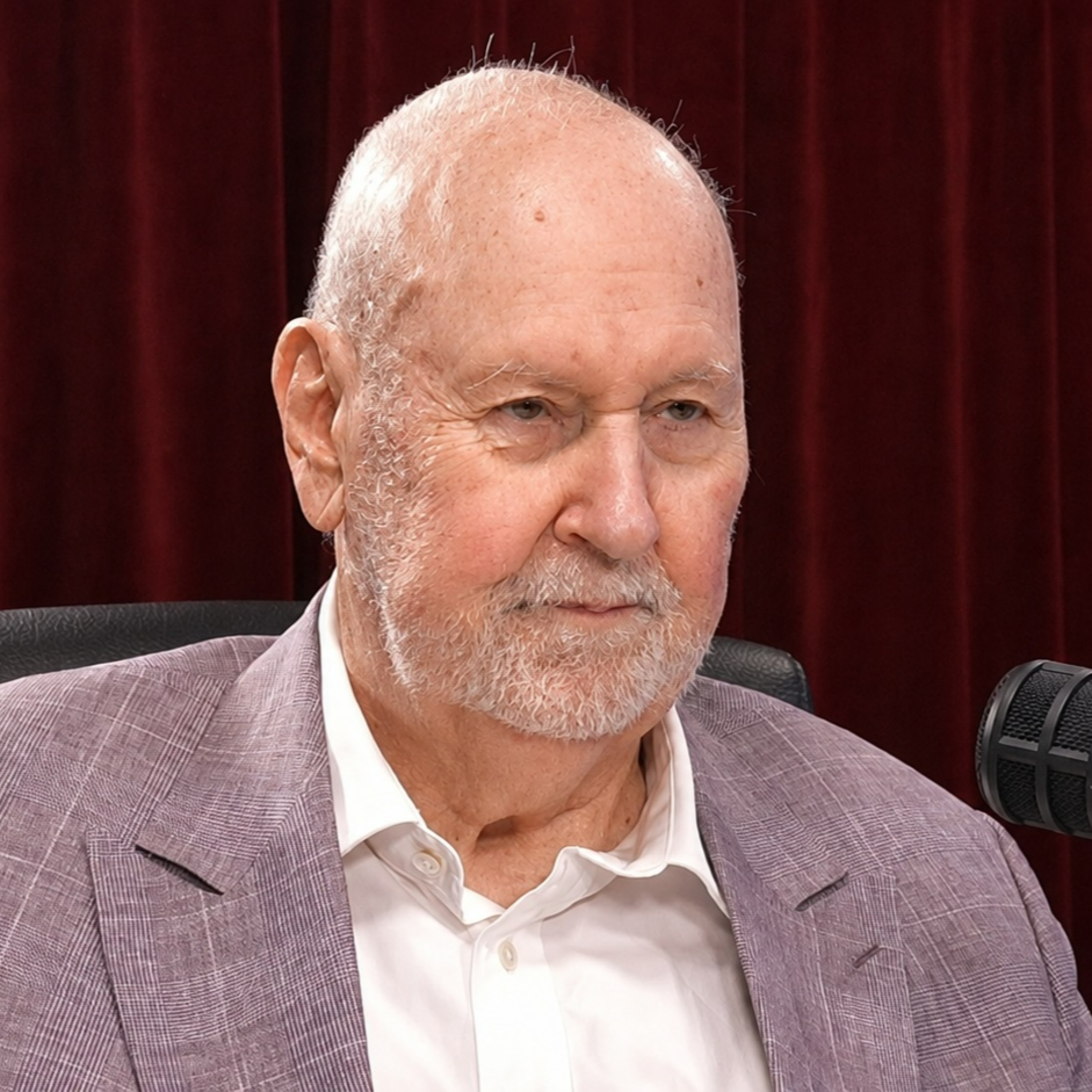
So, my guest today is Professor Karl Bautenbacher, one of Europe's leading experts on European law and the EEA agreement.He served as a judge at the EFTA court from 1995 to 2018 and as its president from 2003 to 2017.He is particularly well known in Iceland for his role in the landmark IceSafe case in which the EFTA court ruled in Iceland's favor in 2013.Today, Professor Bautenbacher works as an independent lawyer and is a visiting professor at the London School of Economics.Together with his daughter, Laura Melusine Bautenbacher, he has just published a new book entitled Iceland before the EU referendum of 29th of August 2026.In this conversation, we will discuss what Icelanders are really being asked to decide in the upcoming referendum,the significance of the EFTA pillar, fisheries,and energy sovereignty, and what Iceland could gain or lose by joining the European Union.Professor Bautenbacher, thank you very much and welcome to my program.It's a pleasure to be here.The Icelandic government says that the referendum on the 29th of August is merely about finding out what the European Union has to offer.You have rejected this description. Why do you do that?Legally speaking, they may have a point.But politically speaking,it seems to be quite clear to me that if there is a yes on the 29th of August,the whole process will gain momentum and it will become much more difficult to reject it at the end.Because once this vote would be through on the 29th,with a positive outcome for the government,then we would see the whole EU machinery coming in, you know, it's well known that the EU is very smart when it comes to influencing the European Union.In such moods and developments in candidate countries or in member states,we have seen that when there was a new treaty which needed to be accepted.And so the technical term for what I think would happen here is path dependence.You would become dependent on reaching that goaland those who are opposed would then easily get the reputation of being backwards leaning.Mm-hmm.ButI still don't understand, excuse me, how can beginning negotiations make it more difficult for Icelanders to say no later?Well, because we would then have all sorts of EU top politicians, you know, encouraging the Icelanders and coming here and giving speeches and they would do that on all levels, not only on the level of the commission, but there would also be scholars in these European entities such as Bruges.They would exercise pressure.Well, not really pressure, probably, you know, just in a smart way to say, well, I mean, there is no alternative.There's a unique chance.If you miss this chance, you will offend the European Union, which opens its arms for you.So are you saying that a yes vote would be irreversible or merely that it would create a political momentum towards membership?Well, irreversible, no, that is too much.But it would enforce the momentum.And that seems also to be the purpose.You argue that Iceland withdrew its EU application in 2015 and that the referendum question is therefore misleading when it speaks of continuing negotiations.The European Commission has taken the position that the old application may still be regarded as valid.What is the legal basis for your conclusion?Well, I mean, it's how many years ago?15 years ago.Even if you have negotiated something positive at the time.You know,15 years are quite a long period and things may have changed.And I would think it would be more honest to speak of reopening or restarting the negotiations, not continuing the negotiations.But what would you say to an undecided voter who says, why not negotiate?See the terms and then decide.Yes, I would say if you vote yes now, it will be more difficult to say no.In the second round.Most Icelanders probably do not understand what the EFTA pillar actually is.Could you explain in practical terms what Iceland has today that it would lose by joining the EU?Yes, the EEA has a peculiar structure.That was a big success of the EFTA states at the time.There are two pillars.There is the EU pillar, which now consists of 27 states after Brexit.Before Brexit.It was 28.And the EFTA pillar, which was meant to consist of seven EFTA countries, started with five EFTA countries and is now consisting of three EFTA countries.And the first president of the EFTA surveillance authority, one of the best people in the EEA, Knut Dalmestad, a Norwegian, he said,this is the quintessence of the EEA agreement that we have our own pillar with our own EFTA surveillance authority and our own.And the most important feature of this is that the EFTA court is not the number two court of the ECJ.The ECJ cannot annul judgments of the EFTA court.And nobody would have thought in the early 90s that this success of the EFTA side would be possible.It is totally independent.You know, it is bound by behavioral rules.There are rules who say the EFTA court shall follow the ECJ.But the behavioral rule is not a structural rule.If the EFTA court goes its own way, then the European Union cannot do much about it.You described the EEA as market integration without political absorption.Where does Iceland still possess meaningful independence and where is Iceland already effectively bound by decisions made in Brussels?Well, first of all, it is important to have this second EFTA pillar.You know, the EU pillar.The EFTA pillar, which is largely independent.That is a big thing from a sovereignty perspective.Iceland has one judge on the EFTA court.One of three.I mean, in the European Union, you have one of 27.And even if there's the grand chamber and an Icelandic judge is sitting, he is one of many.That's already an advantage.The same at the EFTA surveillance authority as compared to the European Commission.And then on top of that, the EFTA states.You are not part of the common policies of the European Union.That means fisheries, agriculture, currency, foreign trade, foreign politics.They go their own way there.That's a big sovereignty advantage.Supporters of EU membership argue that Iceland currently adopts large amounts of EU legislation without having a vote.Isn't that a serious democratic deficit?This is a democratic deficit.Nobody can.Deny this.But if you join the union, you will exchange it for another democratic deficit.Because the union is not as democratic as they claim.At the end of the day, a lot of power is transferred from the national parliaments.And, you know, also from the people.We remember the two ISAF referendums.It's transferred from there to the EU institutions and to your government.We have seen in all the EUs.The EU states, which joined, also in Sweden at the time, that the government became more powerful at the expense of the national parliament.So that's also a democracy deficit.And then within the European Union, almost everybody admits that they have a democracy deficit.The European Union a little bit reminds me of those who say, well, for the time being, we have to go through these difficult times.But at the end, we will get to the paradise.Mm-hmm.Mm-hmm.Mm-hmm.Mm-hmm.Mr.Mm-hmm.Það var Ragnar Grímsson, former president of Iceland, he sat here in your chair just a week ago.And he was very adamant about the Lissabon Treaty, which has hardly been discussed in these discussions here in Iceland, leading up to this referendum.It was a very important document that we should be looking into and discussing.Do you agree with his assessment?Yes, I agree.The Lissabon Treaty came about in APA.It was a very peculiar way, because originally, the European Union had planned to give itself a constitutional treaty, and this constitutional treaty was rejected in France and in the Netherlands.And then the content, the main content of the constitutional treaty was put into the Lissabon Treaty, but in France and the Netherlands, there was no second referendum.Mm-hmm.Mm-hmm.Mm-hmm.Mm-hmm.Mm-hmm.Mm-hmm.Mm-hmm.Mm-hmm.Mm-hmm.Mm-hmm.Mm-hmm.Mm-hmm.Mm-hmm.Mm-hmm.Mm-hmm.Mm-hmm.Mm-hmm.Mm-hmm.Mm-hmm.Mm-hmm.A representation in a council and probably an Icelandic commissioner.Why do you consider that formal influence less valuable than the institutional distance Iceland currently enjoys?Well, you know, there are two answers I would give on that.The real big issues are decided by the powerful member states.When it comes to choosing the new president of the commission, when it comes to choosinga bank that goes essentially with Germany, between Germany and France, even Italy,which is a European Union superpower, if you look at the population, even Italy has beenleft out.Mm-hmm.Giorgia Meloni has bitterly complained about the way Mrs. von der Leyen got her secondmandate.Mm-hmm.And before that, you know, we saw Macron and Merkel, you know, agreeing on Mrs. von derLeyen.Mm-hmm.The president of the commission and in turn, the French got the leadership of the EuropeanCentral Bank.Mm-hmm.So the really important decisions are not taken with the participation of a small memberstate.Mm-hmm.The Swiss government has lodged an application for membership in May 1992.Mm-hmm.And unofficially, this was still maintained until June 2023.In June 2023, the Swiss government has...Mm-hmm....published an official report in which they stated that EU membership is no more an optionfor Switzerland because Switzerland would lose too much autonomy.Mm-hmm.I think Icelanders should be aware of this.Yeah.This is just relatively recently...Yes....that they finally...Yes....decided not to...Yes....take this path.Mm-hmm.Mm-hmm.But small states in the EU, such as Malta, Luxembourg, and Ireland, have sometimes exercised...Yes....influence far beyond their population.Are you underestimating what a skilled small state can achieve from inside the union?I cannot see that Malta has had a lot of success.The country which has really a lot of influence is Luxembourg.But Luxembourg has been there since 1952.A founding member.Well, even before the European community was founded, you know, in the Peristriti.And Luxembourg has always played......a special role between Germany and France.You know, originally, this European community was a deal between Germany and France, essentially.They had been the arch enemies for a long time and started wars and so on.And the Luxembourgers were able to play, you know, the go-between there.Because they speak both languages and, I mean, they are originally German, but they havethe French culture.And so they...They were able to maintain this special position even after the big enlargement.But small states generally don't have any influence.Well, you know, the Icelanders, I mean, you learn English here, but I haven't met manyIcelanders who were fluent in French.No.And if you go to the European Court of Justice, French is the working language.Yeah.So imagine that the judge arrives there at the age of 55 or 58 and then they send himto Bordeaux where he has to learn French.And there's a lot of red wine, you know, and then he or she comes back and may be ableto speak a little bit.But whether they will be able to really deliberate in this sophisticated field of the law, itwill take time.And that's the case.They have to be able to...To understand it, at least.You write that Icelandic representatives carry far greater weight within ESA and theEFTA Court than they ever could within the Commission or the CJEU.Can you give us a concrete example of how that difference matters?Well, you know, I have to be careful here, but I've been around for so long time thatI have seen how the Icelandic college members acted.There have been cases in which a lot of people expected ESA to take action against Icelandand no action was taken.It was delayed and delayed.And then if you are not naive, you conclude that it was not without the participation,the participation of the Icelandic college member.Whether this would be possible in the Commission, I have my doubts.I understand.You describe ISAF as the decisive example of why the EFTA pillar matters.What could have happened differently if Iceland had been an EU member and the case had gonebefore the Court of Justice of the European Union?Nobody knows how the Court of Justice of the European Union would have decided this case.But we have a couple of circumstances.That are interesting.First of all, the Commission wanted Iceland to lose this case.The Commission in this case participated not only by submitting observations, but for thefirst time made a formal intervention.I, as President of the Court, had to issue an order allowing them to formally intervene.That means the Commission made it clear that they meant it.They really wanted ESA to win this case and Iceland to lose this case.And Iceland was a candidate country at the time.That's right.And, you know, a lot of people, Inter Alia, the former Prime Minister, Geir Horde, saidwe fear that we will go into sovereign bankruptcy, into state bankruptcy.And I cannot talk about the deliberations of the EFTA Court.But we were aware of this.And it is from a methodological standpoint, it is legitimate and even necessary that acourt of justice be made.It is legitimate and even necessary that a court of justice be made.It is legitimate and even necessary that a court of justice be made.It is legitimate and even necessary that a court of justice be made.And that rank takes into account not only the micro consequences, but also the macro consequences.That means the consequences for the economy.And whether another court would have done that, we don't know.We just see that, generally speaking, the European Union is in favor of saving banksin the interest of depositors.Because one year after ISAFE, the European Union changed the respective directiveIt's just that, since Iceland objected against the taking over of the directive into the EFTA pillar,it is not part of the EFTA pillar.The Icelandic foreign minister at the time, he vetoed this.And so we have a peculiar situation.But if Iceland were to join, I don't know.It would be difficult to say we don't have this new version of the directive from 2014,one year after the ISAF judgment, which would mean at the end of the day that Iceland,the ISAF, wouldn't be a good law anymore for Iceland.As you say, the European Commission supported the case against Icelandwhile the EFTA court ruled in Iceland's favor.But does this demonstrate a structural difference between the EFTA court and the CJUor simply that independent courts sometimes rule against political institutions?Well, you know, it means that the two, well, I don't want to talk about ECJbecause I'm talking about the commission.The commission had another economic idea than we had.We based our judgment on the idea that moral hazard must be avoided.That if the state gives a guarantee to private banks in this situation,this will prompt private banks to act in an irresponsible waybecause they do not really bear the risk.And I said yesterday, and I said it many times,a huge advantage in this case because my wife is an economistand she had written her PhD thesis on the subject involving moral hazard.So I understood what this case was about economically.So it was really that Iceland had a stronger legal argumentunder the deposit guarantee directive.Well, that's what we found.It's not that the independence of the EFTA court, it was a strong argument.It's a strong argument.But law is no exception.It's an exact science.I just think that one can argue with me,one can challenge the EFTA court's ruling and I'm prepared to defend it.What did the ISF case teach you personally about the vulnerability of a small statewhen powerful governments and international institutions agree on a particular outcome?Well, I was never naive when it comes to that.It confirmed more or less what I had thought before.It was just a situation where there was a small courtwhich was a small court.It was able, you know, to resist.But did you experience personally any political pressure during the case?No.No.Well, I mean this intervention of the commission, but that was legitimate.No, but nobody called me or something like that.No, no.But were you ever made to feel that the ruling in Iceland's favorwould have institutional or personal consequences?No.No, no.No, no.Okay.So let's talk a little bit about the fisheries.The Icelandic foreign minister says that,full control over Iceland's fisheries is non-negotiable.Is it legally possible for Iceland to join the EUwhile retaining permanent sovereign control over its fishing grounds?I don't know, but it's difficult to imagine.I mean, this is a core policy of the European Unionand there are other European member statesinterested in the Icelandic fishing grounds.And my wife and I have spent,three days for decades in Spain,in northern Spain at the Basque coast.And I know that centuries ago,32 Basque waiters were killed here.Yes.Yes.And the law was only repealed, I think, 10 years ago or so.So if they would come again, you couldn't kill them anymore.Only recently they have changed that.But let me add one thing.Even if you would get an exemption,for fisheries,it would be to the commission,or for the commission,for the court of justice,to define the scope of this exemption.And with the time going on,circumstances could change.Other fishing nations couldmake an intervention in the caseand exert pressure and the like.So in that regard,the agreement can be undermined in the future.Well, it can be newly intervened,you know,as I said yesterday night,law is in the hands of judgesand judges are human beingsand some judges have a lot of fantasy.And at the end of the day,even if you get a broad exemption in fisheries,you may have other wishes.You cannot have an agreement,an accession agreement with only exemptions.I mean, also your agricultureis in a peculiar situation.You are so far away up hereand, and,whether you could believe geographyas the essential factor,I have my doubts.You know, comparative law specialists sayyes, geography must matter.But whether a Brussels negotiatoror the member stateswould agree to thatis an open question.But EU officials have suggestedthat a special arrangement for Icelandic fisheriesmay be possible.But can you tell me what's the differencebetween a temporary derogation,a political assurance,and an exemption?Well, a transitional period expiresand when it's expired, it's over.Then the full law applies.A promise is a promise.I mean, it may be keptor it may not be kept.A written assuranceis the strongest you can get.But even then,that's open to interpretation.And even then,you would only have it in this one field.And in other fieldsIs there an example where an EU member statenegotiated a seemingly strongsafeguard that was later narrowedby legislation, commission, enforcementor CJEU interpretation?I'm not aware of another casewhere a new member statenegotiated an exemptionfor a whole policy area.No, it's never happened.I don't think so.The supporters of membership say thatnobody in Brussels wants to destroyIcelandic fisheries and that the EUhas every incentive to accommodate Iceland.Is your concern based onmistrust of intentionsor on the institutional structure itself?Well,you know,the European Union is interestedto have Iceland as a member state.I think, first of all,that is a mistake.Because the European Unionshould have an interest in maintainingthis second structure in Europe.If they were a little bit more far-sightedthey would see that thissecond structure also benefits them.Okay, please elaborate.Yes, becauseas we have seen in ISAF but also in othercases, EFTAhas its own traditionsand its own legal culture.And EFTAhas always been free trade orientedand market orientedand it could be beneficialfor the European Union to have thissecond structure because there would besome sort of limitedsystemic competition.You know,the European Union must not think thatthey are infallible.Some checks and balances?Well, some systemic competitionbetween systems.You know, the times when peopleinvoked infallibilityare over. I think not even the currentPope would do that.And so, why should the European Union do that?And then secondly, a very important point,this EFTA,this EA structure may be neededone dayto come back to the single marketor to certain aspectsof the single marketand if the Swiss would choose that waybecause the Swisshave now been offered a treatyand the government has agreed to itwhich wouldrelegate them to a second ranknation at the end of the daybecause unlike the Icelanderswith the EA agreement, the Swissgovernment is preparedto accept the Court of Justice of the EuropeanUnion as the ultimateinterpreter of thesebilateral agreements.And that I call an unequal treaty.The Swiss is ready toundergo that?The government has signed itbut it will have to go through a referendum.I see.But would you say, is there a chancein the future that the UK wouldenter the EA agreement?When I leftthe EFTA CourtI joined a Londonlaw firmand I adviseda lot of members of both housesof Parliament in Londonand I advised the regionalgovernments in Cardiffand Belfastand in Edinburghand in Glasgowand at the timethere was a lot of talkof the UK at least partly joiningthe EAit did work outbut whether you could find a majorityin the UK for the model the Swiss governmenthas now accepted.I mean a former world powerthe second onlyatomic powerin Europe accepting the Courtof Justice as the court of the other sideI have my doubts.So if the UK would like tojoin certain fieldsof the single market againthe EFTA Court would be a natural choice.They could have a judge thereandnobody knows about the futurebut it would be in the European Union'sinterest to keep thatoption open.Again about the fisheriesdo you think could Iceland realisticallywalk away from negotiationsunless the fisheries exemption were completelysatisfactory orwould the political momentum youalready describedmake that difficult?I think it would make it difficultbut I cannot predict the future.You were carefulto state that neitherthe third energy package northe EFTA would legally require Icelandto build an electricityinterconnector.What then would Iceland actually loseby joining the EU in the field of energy?Well legallyyou know they couldn't be forcedbut again politicallyI don't know.I mean my Swiss Norwegian law firmhas testifiedin front of parliamentary committeesin Switzerlandit was Professor Bart Sandinfrom the University of Oslowho was in charge ofgas in European lawin Norway and all over Europeand he made it clearto the Swiss parliamentariansthat due to the interconnectorbetween Norway and Germanyyou know the Germans switched offtheir nuclear plantsand gasand so Norwaythe battery of Europewas subject to European price volatilityand in southern Norwaythe prices went so highwhich is an unbelievable situation.Yes it is.So do you think Icelandcould gradually face stronger pressureto connect its electricity market to Europe?I wouldn't exclude it.But what specific rulethe EU rule or principlecould be used to pressure Icelandenergy solidarity, competition lawinternal market rules or climate policy?Everything all of the above?Yeah all of the above.YesIf Iceland negotiatedan explicit guaranteethat no interconnector could be imposedwithout Icelandic consentwould that answer your concern?I think so.But whether they would be ableto negotiate another exemptionafter fisheries and agricultureand you name itthere are half a doubt.It would be an agreement full of exceptions.Only exceptions.You acknowledge thatIceland is an important adjustment mechanism.For ordinary Icelanderspaying high interest rateson inflation index mortgageswhat is the practical benefitof retaining that mechanism?I'm not an economistand I tend to speak about matterswhich I think I can master.What I can say is thatafter IceSafethe Icelandic economyhas recovered quicklyalso because the coronawas devaluated.So you thinkthe flexibilityof the corona benefitsthe statemore thanthe benefitswe could get from the euro?I'm Swissand if you seehow much value the euro has lostsince it was introducedvis-a-vis the Swiss francsthat's a weak currency.Imagine how strongthe German mark was.But EU membershipwould not immediately require Icelandto adopt the euro.Could Iceland not join the EUwhile postponing euro adoption indefinitelyas Sweden has effectively done?Well, it's a little bit more tricky situation.I think they wouldobviously they would have to join immediatelyand they would have to fulfill certain criteriabut whether they could do itthe way the Swedes didI have my doubts.There are even those who said nowthe EU is the euro.And of coursethe leading argumentfor the SS side here in Icelandis the euro.That's pretty much the only reasonAnd Donald Trump.And Donald Trump of course in Greenland.We'll get into that a little bit later.But what is the strongesteconomic argument for EU membershipin your opinionand the euroand why do you ultimately find it insufficient?As I said I'm not an economist.I stick to my field.Okay.But there are a lot oflegal arguments.And your position is primarilyconstitutional.Well it'sa little bit of everything.You know andit's my experienceas a European judge who have seenhow the game is played.As I said law is not an exact science.There's a lot of politics involved.Only the rector of the universityof Iceland thinks that he can separatepolitics and law.Yes. ButI know you're not an economist butdo you also believe that Iceland could possiblybe economically worse off within the EU?Well I thinkthey would lose a lot of advantages.Okay.So a little bit about Trump.The most powerful new argument for the EU membershiphere in Iceland is geopolitical.After threats directed at Greenlandand growing uncertainty aboutAmericanreliability.Why should Iceland not seek additional protectioninside the European Union?I mean first of all it's telling thatthis is a new argument.15 years ago it wasn't available.It pretty much seems to bethat those who are in favorare in a way almost happy to have thisso-called argument here.Grasping at straws.And I see the parallel development in Switzerland.Those in Switzerlandwho want thisunequal treaty to go through in the referendumthey come with exactly the same argument.The foreignenvoy of the European Uniongave the Churchill lecture this yearat the University of Zurichwhich is one of my formeruniversities.And she said we are the only bigpower which is acting in a rulesbased way.Now this is not really true.The European Union is lessaggressive than China and the UnitedStates because it has less power.But where they do have powerthey don't respectall the rules all the time.So I think that at theend of the day the European Union is nota military association.They could not provide realprotectionto Greenland if something would happen.And this is prettymuch a momentaneous situation.We will have the midtermelections now and thenwe will see how strong thePresident of the United States still is.And in two years it should be over.I mean even he is not going tolive forever.You are not afraid of a longterm shift in Americanforeign policy?Well you know there are so many200 years ofcommon heritagein thinking, enlightenmenton both sides of the Atlantic.So four years of Trumpcan't really change that heritage.Butbecause you said the EUwhere it exercises its poweris not always following the rules.Can you name an example?Yes I can name Switzerland.Switzerland was thrownout of thisthrown out of the horizonthis research program.Although the competent commissionera Norse gentleman Johannes Hahnhad made the explicitpromise to the Swisshe said no matter whether youaccept this treaty with the European Court of Justicewe will keep youin this program and get it through the mark.There are other examplesI could mention.NATO provides military defensebut the EU canexercise economic, diplomaticand regulatory power.Could EU membership provide Icelandwith forms of protection that NATO cannot?You mean militarily?No butany protection.Difficult to say. Probably soft power.The EU itself is still dependenton the US.That's true.You described the European Commissionas increasinglypolitical and the CJEUas an engine of integration.Supporters of the EU would say thatyou are presenting normal European institutionsas if they were hostile to nationalsovereignty. What is your answerto that statement?They are a bit hostile to national sovereignty.It's quite clear.I have seen the Commission actingover 22 years directlywhile I was sitting on the EFTA Court.I had the clear impressionthat over this period of timethe Commission became more and morepolitical.The Commission has shown upin virtually every casewe had and presentedthe view of the European Union.In the early yearsthe Commissionwas quite principledin the way it pleaded.In the last yearswhen I was on the Courta lot depended on the individualpleading.You had the impressionthat there was no unitéde doctrine anymore.That is a consequenceof the Commission havingbecome more political.I can even confirm thatbecause when Mr. Junckerbecame Commission Presidenthe explicitly saidI want to have a political commission.The Commission wantsto be almostthe counterpart of the Presidentof the United States.That is not what the systemis made for originally.So the more politicalthe Commission becomesthe less it is the guardianof the treatyand the less it caresabout equal treatment and the like.You said yesterdayin your lecturethat one cannot controlthe European Court.Should the democratic governmentever be able to control a court?To hold the individual judgesaccountable.A court should never be controlledby the politicians.But the individual judgesat least on the highest levelshould be held accountableand that can only happenif the vote is open.And it isn't?It is not open.It is the French tradition.The French tradition saysthe court should onlybe la bouche de la loi.That means the courtshould not add anythingto what has been writteninto the court.So nobody knowswhat individual judgeshave written or decided.Only rumors go around.But no, officially you don't know.That's very differentfrom what happens in the United Kingdomin the United Statesand all the countries in Iceland.In that wayyou can't hold them accountable?No.I understand.Is your concernlack of political controlor that the direction of the court'slegal development cannot be constrainedby the original bargainsstruck by member states?Well, you knowI'm not pleading in favoras I said of politicianscontrolling judgesin the United States.It's a very different mechanism.You could imaginea term of officewhich is longer than six years.Because this againis a problem that the judgesare only appointed for six years.And after six yearstheir government must renominate themwhich gives the governmentalso influence on the judge.And as I said rumors travel.Rumors may go to the capital.Because the rumor had reached his governmentthat in a crucial casehe had voted against them.And so the head of government at the timeI'm not going to tell which country it wassaid we don't want him anymore.I mean this system could be improved.You argue that the EU suffersfrom a structural separationbetween power and political accountability.Who exercises power in the EUwithout beingperfectly answerable to voters?Well the Commission.As an example.Also the European Parliamentis not comparable to anational parliament.You have seen in Julyhow this chat control was pushed through.I meanit was a pure abuse of procedure.It was basically the last daybefore the holidaysand in order to defeat this proposalyou would have neededa certain majorityof the members of parliamentand the leadership knew thatmany of them were already on holidaysand so they scheduled the voteand it went through.They had more no votesbut still itwent through becausethat's the system.I meanI think that's a clear example ofone of the biggestdemocratic deficits we've seen.I think so.A national governmentsits in the counciland elected representativessit in the European Parliament.Why is that notcould you explainwhy that is not a sufficientdemocratic legitimacy?Well you knowI'm just criticizingthe whole system together.If we take nowthe example of sanctionsagainst private peopleRussian private citizensthe separation of powersbetween the council and the commissionyou get the impression that theypretty much work hand in handand you knowwhether a privateentrepreneuris reallysupporting the waragainst the Ukraineis doubtfulbecause at the same timewe see that whole areasare exempt from the sanctionsthere has been a lot of trade in Russian goldthere has been a lot of trade in Russian gastitanium you name ita lot of these raw materialswhich are needed in the westand at the end of the daythe question arisesis that hypocriticalthat you go after a couple of privateowners and at the same timeyou allow all this trade going onin your own interestIt's very hypocriticalI think soBut the EIA system also imports legislationthat Iceland did not vote onand that system is stilldemocratically preferableWell that is clearlya downside of the EIAbut it has been there for 30 yearsand what I'm saying isit is wrong to sayif we join then we sit at the tableand we have gotten rid of this deficitbecause you would only exchangethis deficit for another oneWould it be more honest for the Icelandic governmentto present the first referendumexplicitly as a decision aboutentering an accession processrather than as a neutralattempt to see what is in offerYesand I think that even the Venicecommission has madean allegation to thatWhat would a genuinely fairand constitutionally clearreferendum question have looked likeWell I would have to take a little bitbefore I usea formulation herebecause there are people here in the country just waitingto know that I make a blunderBut if Iceland votes yes in Augustbut later votes no in the final agreementdo you believe that the EIArelationship could simply continue unchangedor might relations with the EU alreadyhave been alteredNo I think the EIA is the EIADo you think thispath we are going down nowwould end in a no in the second referendumI cannot tellWhat is the single mostvaluable power Iceland possessestoday that it would surrender by joiningthe European UnionYou mean politicallyJust whateverYou knowwhen I drove herethis morning with my wifeI said to herand I mean thisWhat I admire most aboutthe Icelandersthey are only 400,000 peopleWhen I was president of the courtthey were only 360,000They have a self-esteemlike a big countryand that I like a lotabout Icelandand I'm not sure whether you will still have thatif you would be subjectto the rules of the European UnionWe would be a very small fishin a biggreat big pondWhat is the strongest argumentin your opinion made by the supportersof EU membershipan argument that you believe Icelandersshould take seriously if anyNoneI have to take the whole pictureThe whole picture looks badThe whole picture looks badOk, I understandIs there any conceivable accession agreementthat would cause you to recommendthat Iceland join the EUIf so, what would it have to containNo, I'm not going tospeculate about thatI've never been a negotiatorI've been a judge, I've been a scholarI have lectured at dozens ofuniversities around the worldI was always welcomeMy lectures were appreciatedas being of a scholarly levelThere's only one universityin the world which has not let me speakThat's the state owned universityof IcelandAre you warning Icelandersagainst opening negotiationsor are you warning them against misunderstandingwhat the first yes would meanWell I thinkIf I were an IcelanderI'm only giving me advice hereI'm coming here because I like this countryand to a certain extent I'm alsodefending my legacyas the president of the EFDAIf I would vote herewould be able to voteI would vote no on the 29th of AugustThat is just your honestopinionIn order not to open the floodgatesBut could you speculate a little bitabout if Iceland votes yeson the 29th of Augustwhat do you predict would happennextWell I think first of allyou know they would have to havea new faceas chief negotiatorbecauseI'm not saying thatthe guy who negotiatedlast time whom I knowStefan HaukYes because he was an ambassadorin Brussels when I was president of the EFDAI'm not saying that he is not a good negotiatorbut I mean he has dealtwith the matter beforeSo according to general principleshe has been involvedalready onceIs that not good?Well any appearance ofsome kind of leaning towardsa certain outcomeis not goodand he has already made statements nowI saw on public televisionthat he believesthat they get a good dealand so onBy the way alsoI wondered that yesterday nightthere were over 200 peopleprobably even 250 peoplethat the public broadcaster didn't show upI advised the Icelandic governmentyears agoand I was on the line of the governmentI was always asked to give an interviewto RÚFthis time notI think that's a little bit astonishingIt is astonishingIt looks like RÚF has already decidedwhat sides they are supportingYou are saying thatI keep my mouth shutThere was something I wanted to ask youDo you thinkbecauselast timethey left thedifficult partsthe chaptersthe common fisheries policyand all themost difficult agreementsthey kept themto last and they never opened themFish is always lastI meanI would thinkbecause the foreign minister has saidit's non-negotiableso I wouldthink it would be wise to start with that partand if that's not going to go somewherewe can just walk away from thisbut I have a feeling they are not going to start with that partthey are going to keep it to the last. What do you think?I don't knowAs I said I have never been a negotiatorI don't want to speculateNoOlof Ragnar talked aboutthe last thing that the EU wantsis a no in a referendumThey don't want to get rejected. It looks badso they wouldpreferjust not to open the difficult partsand they would ratherhave the discussion just fade outthan that it would end in ano referendumDo you think he ison a path to somewhere there?Well what is well knownis the tacticof negotiatorsto enter a dilatorycompromise. That meansyou knowto postpone the solution of a problemand to push itto the courtsbut that is nota positive thingIn one sentencewhy shouldan undecided Icelandic voteno on29th of August?I would argue with theprinciple of the burden of proofIcelandhas so farhad a good dealagreement has proven to be a good dealfor Iceland and in particular for Icelandbecause of thebecause of the wayyou got out of thecrisis. The burden of proofthatan EU membershipwould most probably be betteris not with those whowant to stick to the current modelit's with those who want toenter this adventureButthey have thispretty brilliant marketing strategythatpeople don't need to know anything about the European Unionyou don't have to read the list upon 3Dyou don't need tofind anything outyou just say yes on the 29th of Augustand then everything will open up to youthen you will know everythingYes, that's why I have been askedby certain people here in the country to come hereandyou know speak a little bitIt is a smart waybutan honest wayI have my doubtsWell, Mr. BodenbacherI want to thank youvery much for coming to Icelandfor speaking your mindon this caseand especially for coming to my studiogive me your timeout of your busy scheduleandI hopewe will havesomea good outcome out of thison the 29th of Augustbut we will seenobody can predict the futurebut again I thank you very much for comingand I wish you all the bestThank you very much, it's been my pleasureThank you